Your first 30 days in the UK – the moving checklist, in the order that actually works
Last updated 25 September 2026Rules checked every MondayOfficial sourcesSources & methodology →
An eVisa, a National Insurance number, a GP, council tax and a bank account: moving to the UK means a string of separate sign-ups, and the order decides how quickly you settle. Here is your checklist for the first 30 days in the UK, with the rules that changed in 2025 and 2026.
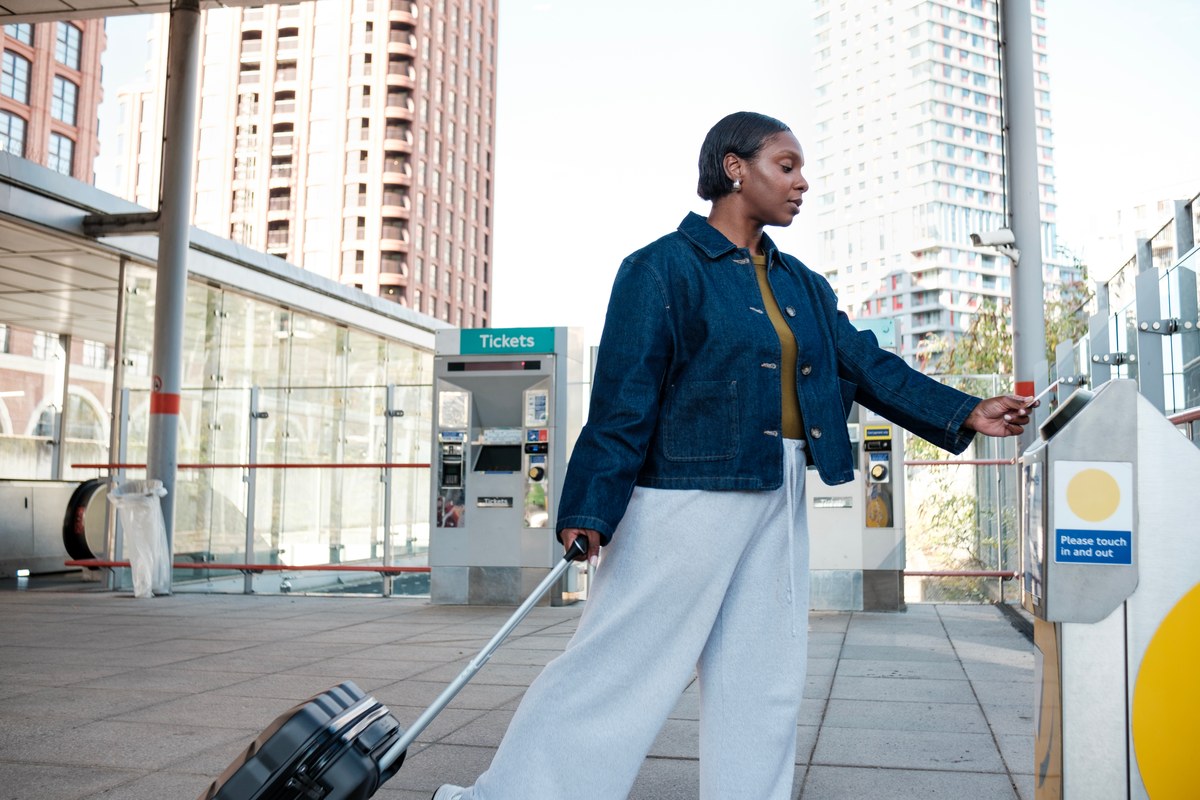
If you are moving in 2026, your first 30 days in the UK look different from a few years ago. eVisas have replaced physical immigration documents, Home Office fees rose on 8 April 2026, and since 1 May 2026 private renting in England has followed the Renters' Rights Act. The logic of the first month is unchanged: status first, then a home, then everything that needs an address – your UKVI (UK Visas and Immigration) account, a National Insurance number, the council, a GP and a bank.
Before you travel: your status, eVisa and UKVI account
Unless you are British or Irish, you need permission to live here before you board. Irish citizens need no visa or permit under the Common Travel Area, while EU, EEA and Swiss citizens who were not living here by 31 December 2020 need a visa like everyone else – see part 2.
A granted visa comes as an eVisa, not a card, and you can only see it once you have linked it to a free UKVI account – one per person, including each child. Add the passport you will travel on: eVisas are checked at check-in and at the border, and a share code for travel, valid for 90 days, works as backup proof.
| Task | What applies | Who it concerns |
|---|---|---|
| Visa decision | Usually 3–12 weeks, depending on the visa | Everyone except British and Irish citizens |
| TB test | Chest X-ray at a Home Office-approved clinic; certificate valid 6 months | Coming for 6 months or more after recently living 6 months or more in a listed country |
| ETA (electronic travel authorisation) | £20 since 8 April 2026 (was £16); visits only, no work | Visitors – not people moving here |
| Household goods | No import duty or VAT with Transfer of Residence relief, form ToR1 | You lived outside the UK for at least 12 consecutive months |
| Pets | Microchip, then rabies vaccination at least 21 full days before travel | Dogs, cats and ferrets entering Great Britain |
Source: the Home Office, UKVI, HM Revenue & Customs and the Animal and Plant Health Agency, read 23 September 2026.
Carrying £10,000 or more in cash between Great Britain and a country outside the UK? Declare it to customs. In Northern Ireland the threshold is €10,000.
The first 30 days in the UK: what is the right order?
Once you land, each step unlocks the next. This order works:
| Step | What | Where |
|---|---|---|
| 1 | Share code to prove your right to work | Your UKVI account, then your employer |
| 2 | National Insurance number, unless your eVisa already shows one | Online, from inside the UK |
| 3 | Right to Rent check – England only | Your landlord |
| 4 | Council tax registration | Your local council; in Northern Ireland, Land & Property Services |
| 5 | GP registration | A surgery that covers your address |
| 6 | Bank account | Any bank; the nine largest must offer a basic account |
| 7 | School place for your children (England) | Your local council |
| 8 | Driving licence check | DVLA (Driver and Vehicle Licensing Agency); in Northern Ireland, the Driver and Vehicle Agency |
Source: UKVI, HM Revenue & Customs, the NHS, HM Treasury and the government guide School admissions, read 23 September 2026.
Week one: right to work, National Insurance number and a bank account
You must prove your right to work before you start. If you are not British or Irish, you choose between a share code and eligible immigration documents, and the employer cannot reject you for choosing a document. A share code lasts 90 days, can be reused and is checked together with your date of birth.
Your eVisa may already show a National Insurance number. If not, apply online from inside the UK and allow up to 4 weeks after proving your identity – you can start work before it arrives. Until your employer has your details, you may be taxed on an emergency code ending in W1, M1 or X; HMRC (HM Revenue & Customs) can take up to 35 days from your start to correct it. Part 3 has the details.
The nine largest current-account providers must offer a fee-free basic bank account, with no overdraft, to anyone legally resident in the UK without another suitable account – including people with no fixed address. The bank must open or refuse it within 10 business days of a completed application. A tenancy agreement, a council tax bill or a letter from HMRC or your employer are commonly accepted as proof of address; part 4 covers the rest.
Renting a home and registering for council tax
Private renting in England has followed the Renters' Rights Act 2025 since 1 May 2026. New tenancies roll on with no end date, 'no fault' section 21 evictions are gone, and a landlord cannot take rent before you sign or ask for more than one month's rent in advance. Deposits are capped at 5 weeks' rent (6 weeks if the annual rent is £50,000 or more) and must be protected in a government-approved scheme within 30 days. Landlords may not turn you away for having children or receiving benefits.
Right to Rent checks apply only in England: your landlord checks every tenant aged 18 or over, in the 28 days before the tenancy starts if your permission is time-limited. In Scotland a deposit can be at most two months' rent, in Northern Ireland one month's, and in Wales tenants are 'contract-holders' under the Renting Homes (Wales) Act 2016. View a property in person, or have someone you trust do it, before you pay.
When you move in, contact the local council to register for council tax. You usually pay from 18, and a full bill assumes two adults: live alone and you get 25 per cent off, but only if you apply. Households where everyone is a full-time student pay nothing. Wales has nine bands, Scottish bills usually include water and waste charges, and Northern Ireland charges domestic rates instead of council tax.
Healthcare and benefits: GP, NHS 111, 999 and NRPF
If you paid the Immigration Health Surcharge, you can use the NHS free of charge from the date your visa starts, though you still pay for prescriptions in England, dental treatment and eye tests.
Register with a GP (family doctor) surgery in week one, before you need one. In England it is free, takes about 15 minutes per person online, and needs no ID, proof of address, proof of immigration status or NHS number. You usually hear back within 5 days, and a refusal must be explained in writing within 14 days. In Northern Ireland, people arriving from outside the UK use form HSCR-1.
Call 111 or use 111 online (ages 5 and over) for urgent help, 999 in an emergency and 101 for non-emergency police. In England a prescription costs £9.90 per item, and the government announced it stays at £9.90 in 2026/27. Prescriptions are free for everyone in Northern Ireland, and prescriptions from a local GP are free in Scotland and Wales.
Most visas carry an NRPF (no recourse to public funds) condition: you cannot claim most benefits, including Universal Credit, Child Benefit, Housing Benefit and Council Tax Reduction. Part 9 explains what you can still get.
What to do now
| Step | What | When |
|---|---|---|
| 1 | Check which route lets you live here (part 2) | Before you plan the move |
| 2 | Create your UKVI account and add the passport you will travel on | As soon as your visa is granted |
| 3 | Book a TB test if required, prepare pets and apply on form ToR1 | Before you travel |
| 4 | Generate share codes for your employer and landlord | Before you start work or sign |
| 5 | Apply for a National Insurance number if your eVisa shows none | In your first week |
| 6 | Register with a GP and contact the council about council tax | In your first week |
| 7 | Open a bank account and check your driving licence | Once you have proof of address |
Source: UKVI, HMRC and the NHS, read 23 September 2026.
Official sources
The official pages this guide is based on, read 23 September 2026. Links open the authority’s own website.
- GOV.UK – eVisas: access and use your online immigration status · gov.uk
- GOV.UK – eVisas: access and use your online immigration status · gov.uk
- GOV.UK – Pay for UK healthcare as part of your immigration application · gov.uk
- GOV.UK – Entering the UK / Taking cash in and out of the UK · gov.uk
- GOV.UK – Entering the UK · gov.uk
- NHS website – Register with a GP surgery (reviewed 28 July 2025) · nhs.uk
- NHS website – When to use NHS 111 · nhs.uk
- NHS website – Moving to England from outside the EEA / from EU countries · nhs.uk
- legislation.gov.uk – Payment Accounts Regulations 2015 (regs 18–23) · legislation.gov.uk
- legislation.gov.uk – Payment Accounts Regulations 2015 (regs 18–23) · legislation.gov.uk
- GOV.UK – Driving in Great Britain on a non-GB licence (smart answer, resident, car) · gov.uk
- GOV.UK – Driving in Great Britain on a non-GB licence (smart answer) · gov.uk
- GOV.UK – Income Tax rates and Personal Allowances / Scottish Income Tax · gov.uk
- GOV.UK – Income Tax rates and Personal Allowances / Scottish Income Tax · gov.uk
- GOV.UK – Tax codes: emergency tax codes · gov.uk
- GOV.UK – National Minimum Wage and National Living Wage rates · gov.uk
- GOV.UK – Renters’ Rights Act overview for tenants (England) · gov.uk
- GOV.UK – Private renting: deposits / Tenancy deposit protection · gov.uk
- GOV.UK – School admissions · gov.uk
- GOV.UK – School admissions · gov.uk
- GOV.UK – Contact the police · gov.uk
- GOV.UK – TV Licence · gov.uk
- GOV.UK – Tenancy deposit protection · gov.uk
- GOV.UK – Tuberculosis tests for visa applicants · gov.uk
- GOV.UK – How to apply for a visa to come to the UK: applying online and getting a decision · gov.uk
- GOV.UK – Get a faster decision on your visa or settlement application · gov.uk
- GOV.UK (Valuation Office Agency) – Start paying Council Tax · gov.uk
- Ofcom – Switching mobile phone provider ( · ofcom.org.uk
- NHS website – NHS prescription charges · nhs.uk
- nidirect – Your local doctor (GP) · nidirect.gov.uk
- GOV.UK (Home Office) – Public funds ( · gov.uk
- GOV.UK (HMRC) – Check if you can claim the 4-year foreign income and gains regime · gov.uk
- GOV.UK (DBT) – Plan to Make Work Pay and Employment Rights Act: timeline update (25 Aug 2026) · gov.uk
- GOV.UK (HMRC) – Transfer of residence to the UK ( · gov.uk
- GOV.UK (Defra/APHA) – Bring your pet dog, cat or ferret to Great Britain · gov.uk
Relocate in Europe provides general information, not legal or financial advice for your individual situation. Check with the authority named above before you act – rules change, and your case may differ.