Healthcare in Sweden – 1177, your vårdcentral, the 2026 fee caps and dental care
Last updated 25 September 2026Rules checked every MondayOfficial sourcesSources & methodology →
The first fever in a new country is when you find out how its healthcare works. In Sweden it starts with a phone number, runs through a health centre you choose yourself and stops at a ceiling on what you pay. Here is who to call, what it costs in 2026 and why the dentist works differently.
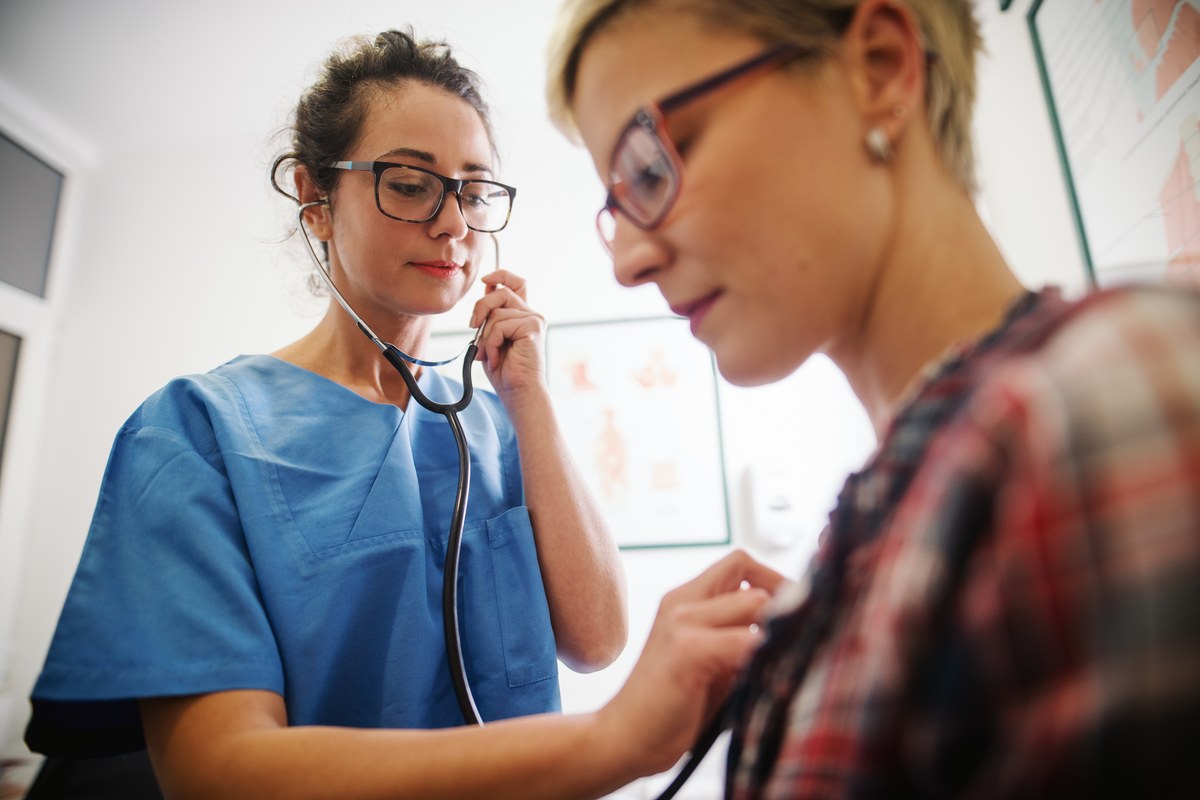
Your right to Swedish healthcare follows your address, not your passport. According to Försäkringskassan (the Swedish Social Insurance Agency), once you are folkbokförd (registered in the population register – see part 3), you pay the same patient fees as everyone else who lives in Sweden, whatever your citizenship. And the costs are capped. In 2026 you never pay more than 1,450 kronor in twelve months for outpatient visits, and never more than 3,800 kronor for prescription medicines – a ceiling raised from 2,900 kronor on 1 July 2025.
Before you are registered, other rules apply. The high-cost protection for medicines covers people who live or work in Sweden, and people with a European Health Insurance Card, the EU card, from another EEA country or Switzerland, who must show it at the doctor's and at the pharmacy. According to E-hälsomyndigheten (the government agency for e-health), people employed here without living here are entitled to most parts of that protection. Sweden also has agreements on medicines with Algeria, Australia and the Canadian province of Quebec.
Where to go – 1177, vårdcentral or 112
The front door to Swedish healthcare is a four-digit number. Call 1177 for healthcare advice, day and night. If it is life-threatening, call 112 instead.
The digital service 1177 direkt lets you seek care online for symptoms that are not urgent or life-threatening, but it requires a Swedish personnummer (personal identity number) and an e-legitimation (electronic ID), so it may be out of reach in your first weeks. For everyday care your base is a vårdcentral (health centre), the primary care clinic where you are listed as a patient.
| Situation | Where to turn | Good to know |
|---|---|---|
| Life-threatening emergency | Call 112 | Free of charge; operators speak Swedish and English and can call in an interpreter |
| You are ill and unsure what to do | Call 1177 | Healthcare advice around the clock |
| Symptoms that are not urgent | 1177 direkt, online | Requires a personnummer and e-legitimation |
| Suspected acute poisoning | Giftinformationscentralen (the poisons information centre), 010-456 6700 | Around the clock; call 112 if it is life-threatening |
| Everyday, non-emergency care | Your vårdcentral | You choose which one |
Source: 1177, Polisen and Giftinformationscentralen, read 22 September 2026.
Choosing your vårdcentral
You can list yourself at a vårdcentral anywhere in Sweden, regardless of where you live, and you should be able to choose a fast läkarkontakt (regular doctor) there. You can switch at most twice a year, unless there are special reasons. Under patientlagen (the Patient Act) you can choose outpatient clinics across the country, you have the right to information you can understand – including through an interpreter – and to take part in decisions about your care.
One limit is worth knowing. Vårdgarantin (the care guarantee) applies only in the region where you are registered, and if you seek care in another region, you pay that region's patient fee. That is why the fee for a single visit is not one national figure. Anna, registered in one region but working in another, can list herself near her office – but her care guarantee is her home region's.
What it costs – the ceilings for 2026
Adults pay patient fees, but only up to a point. Once your outpatient fees reach the ceiling, you get a frikort (exemption card) for the rest of the twelve-month period, valid in every region. Prescription medicines have a separate ceiling. All pharmacies use the same database, so you can buy at any of them and your costs still count towards the same limit.
| What | The rule in 2026 |
|---|---|
| Outpatient visits | At most 1,450 kronor in 12 months, then a frikort; a region can set a lower ceiling |
| Prescription medicines | At most 3,800 kronor in 12 months; frikort when the total cost before discount reaches 7,117 kronor |
| Medicines for children under 18 | Free, if included in the benefits scheme – also for asylum-seeking and undocumented children |
| Contraceptives | Free under 21, if included in the high-cost protection |
| A dearer brand than the pharmacy's cheapest equivalent | You pay the difference yourself, and it does not count towards the ceiling |
Source: 1177 and E-hälsomyndigheten, read 22 September 2026.
When a medicine can be substituted, the pharmacy must offer the cheapest equivalent. The brand on your prescription is still yours to choose – at your own extra cost.
Dental care – free until 19, then support from the state
Dental care is where newcomers are most often surprised. It is free up to and including the year you turn 19. From 1 January of the year you turn 20 you pay yourself, with help from tandvårdsstöd (the state dental care support), which Försäkringskassan administers. It has three parts: a yearly general allowance, a high-cost protection based on the state's reference prices and, for some, a special allowance.
| Support | Level in 2026 |
|---|---|
| General dental allowance (ATB), from the year you turn 20 to the year you turn 23 | 600 kronor a year |
| ATB, from the year you turn 24 to the year you turn 65 | 300 kronor a year |
| ATB, from the year you turn 67 | 600 kronor a year |
| ATB if you turn 66 in 2026 | 600 kronor this year, under a temporary rule |
| High-cost protection | You pay the first 3,000 kronor in a year; then 50 per cent of costs above 3,000 kronor and 85 per cent of costs above 15,000 kronor are covered |
| Special dental allowance (STB), for certain illnesses and disabilities | 1,000 kronor per half-year, paid on 1 January and 1 July |
| Asylum seekers and undocumented adults | Care that cannot wait, at most 50 kronor per visit; children free up to and including the year they turn 18 |
Source: Försäkringskassan and 1177, read 22 September 2026.
Children – BVC and the vaccination programme
For babies and young children, your contact is the barnavårdscentral, BVC (child health centre), which is free. With a newborn, a BVC nurse usually visits you at home one to two weeks after you come home from the maternity ward. At BVC your child has health check-ups and is vaccinated under the Swedish vaccination programme, which protects against diseases including diphtheria, whooping cough, tetanus, polio, pneumococcal infection, rotavirus, measles, mumps and rubella. School is covered in part 10.
| Age | Under the Swedish programme |
|---|---|
| 3, 5 and 12 months | Vaccinations at BVC |
| 18 months | Measles, mumps and rubella |
| 5 years | Vaccinations at BVC |
| School years 1–2 and 8–9 | Further doses |
| School years 5–6 | HPV |
Source: 1177, read 22 September 2026.
Travelling – the EU card
Before you travel in Europe, order the Swedish EU card from Försäkringskassan. It is free, valid for three years in the EU and EEA, Switzerland and the UK, and gives you necessary healthcare and dental care on the same terms and at the same cost as local residents. Every child needs their own card. Delivery takes up to 10 days, Försäkringskassan cannot speed it up, and there is no digital version. In Denmark, Norway, Finland and Iceland you do not need it: a valid ID document and your address in Sweden are enough.
What to do now
| Step | What | When |
|---|---|---|
| 1 | Save 1177 and 112 in your phone | Today |
| 2 | Choose a vårdcentral and list yourself there | In your first weeks; you can switch twice a year |
| 3 | Ask for an interpreter if you need one | When you book |
| 4 | Keep track of your fees towards the 1,450 and 3,800 kronor ceilings | Throughout each 12-month period |
| 5 | Book a dental check-up and use your ATB | Every year from the year you turn 20 |
| 6 | Contact BVC if you have a baby or young child | Soon after you arrive |
| 7 | Order an EU card for each family member; if you cannot order online, call Försäkringskassan on +46 771-524 524 | At least 10 days before you travel |
Source: 1177, E-hälsomyndigheten and Försäkringskassan, read 22 September 2026.
Official sources
The official pages this guide is based on, read 22 September 2026. Links open the authority’s own website.
- 1177.se, Välja vårdmottagning · 1177.se
- Försäkringskassan, EU-kort och vård utomlands · forsakringskassan.se
- 1177.se, 1177 direkt · 1177.se
- 1177.se, Högkostnadsskydd för öppenvård · 1177.se
- E-hälsomyndigheten, Högkostnadsskydd för läkemedel · ehalsomyndigheten.se
- 1177.se, Läkemedel på recept – kostnader · 1177.se
- 1177.se, Tandvård när du är över 19 år · 1177.se
- Försäkringskassan, Tandvårdsstöd · forsakringskassan.se
- 1177.se, Patientlagen · 1177.se
- 1177.se, Besök på barnavårdscentralen (BVC) · 1177.se
- 1177.se, Vaccinationsprogrammet för barn · 1177.se
Relocate in Europe provides general information, not legal or financial advice for your individual situation. Check with the authority named above before you act – rules change, and your case may differ.