Driving licence, car and getting around – foreign licences, winter rules and half-price passes
Last updated 25 September 2026Rules checked every MondayOfficial sourcesSources & methodology →
Your licence from home may work in Sweden for as long as it is valid, or stop after a year – it depends on where it was issued. Here is how to keep driving legally, what it takes to bring a car, the winter rules that catch newcomers out, and why a monthly pass costs half as much this autumn.
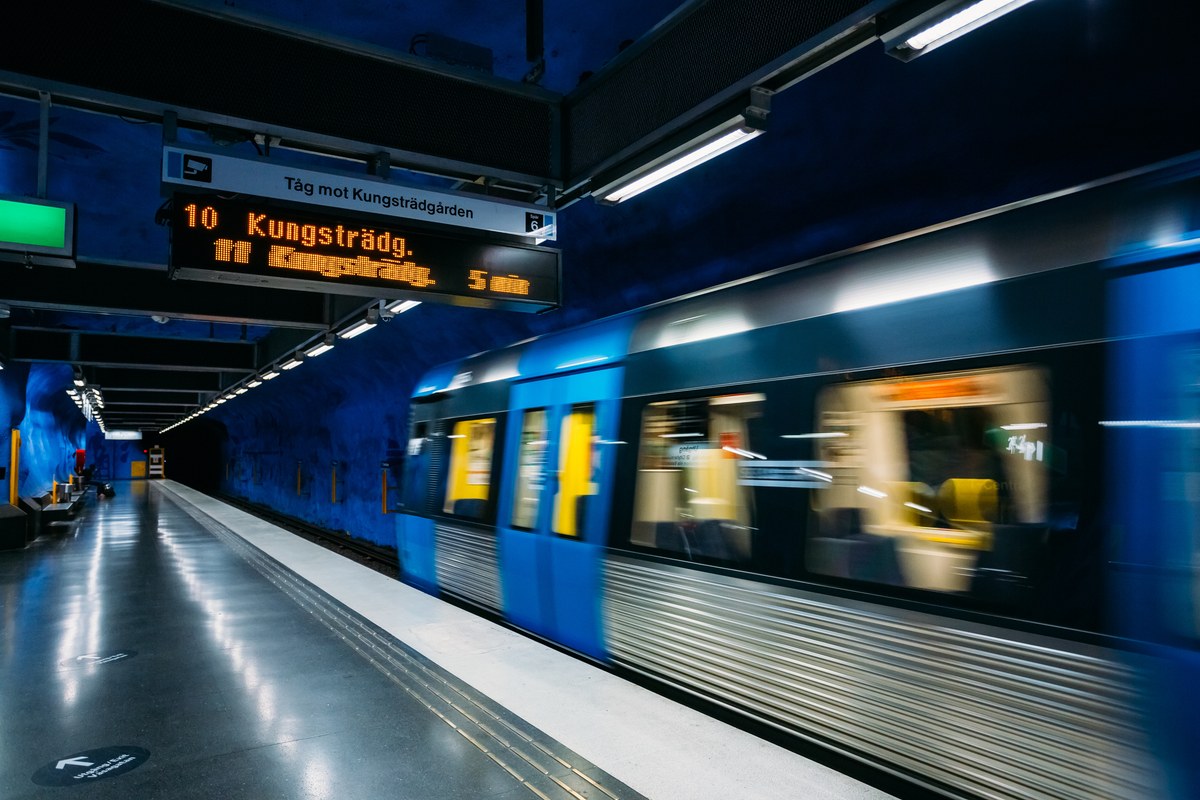
Two changes in 2026 matter here. Since 1 May, Transportstyrelsen (the Swedish Transport Agency) has made some EEA licences harder to exchange, to stop what it calls körkortsturism (licence tourism). And from 1 July, monthly travel passes cost half price for the rest of the year.
Start with the card in your wallet. According to Transportstyrelsen, a körkort (driving licence) from an EEA country stays valid in Sweden as long as it is valid where it was issued and has not been exchanged – with no time limit, even after you are folkbokförd (registered in the population register) here. A licence from outside the EEA stops being valid once you have been registered for more than one year, unless it comes from the United Kingdom or the Faroe Islands.
Your foreign licence – what applies to you
| Licence issued in | Valid in Sweden | Can it be exchanged? |
|---|---|---|
| An EEA country | Yes, as long as it is valid at home – no time limit | Yes; stricter rules from 1 May 2026 if it originated outside the EEA |
| United Kingdom or Faroe Islands | Yes, also after one year of registration | Yes, normally within one year of registration |
| Switzerland or Japan | Until you have been registered for more than one year | Yes, normally within one year of registration |
| Any other country | Until you have been registered for more than one year | No – you need a Swedish licence |
Source: Transportstyrelsen, read 22 September 2026.
To exchange a licence you need a valid licence and permanent residence in Sweden, and you must meet the personal and medical requirements. Transportstyrelsen can sometimes make an exception for a non-EEA licence during a limited stay.
Since 1 May 2026, an EEA licence that originated in a third country is exchanged only if it was issued after a driving test in the EEA, came from exchanging a licence from the Faroe Islands, the United Kingdom, Japan or Switzerland, or you held the equivalent licence for at least five years before settling permanently in Sweden.
A licence in a language other than English, German or French, and not designed under the Geneva or Vienna road traffic conventions, is valid only with a certified translation into English, German, French, Swedish, Danish or Norwegian. Authorised translators can be found through Kammarkollegiet.
Taking a Swedish licence
If your licence cannot be exchanged, you start with a körkortstillstånd (learner’s permit), which you need to practise driving and take the tests.
| Step | What it involves | Fee or time limit |
|---|---|---|
| Körkortstillstånd (learner’s permit) | Apply to Transportstyrelsen; for group 1, which includes cars (B), send a synintyg (eyesight certificate) | Free; handling usually up to 4 weeks; valid 5 years, cannot be extended |
| Synintyg | Many opticians send it in digitally | Issued no more than 2 months before you apply |
| Practice with a private handledare (supervisor) | An EEA licence holder sends a copy of it; a non-EEA licence counts only if it replaced a Swedish one | – |
| The licence itself | Issued or renewed by Transportstyrelsen | 375 kronor |
Source: Transportstyrelsen, read 22 September 2026.
Budget for lessons and tests yourself: since 1 January 2024 you cannot apply for a driving licence loan from CSN (the Swedish Board of Student Finance). Example: Anna’s licence cannot be exchanged and stops working after her first registered year, so she applies for a learner’s permit early.
Bringing or buying a car
For a car to be registered in Sweden, Transportstyrelsen carries out an ursprungskontroll (origin check). The tax side depends on where the car comes from.
| Car comes from | What you do |
|---|---|
| Another EU country | Apply for an origin check at Transportstyrelsen; a new vehicle must also be reported to Skatteverket’s office in Ludvika for VAT |
| Norway, Iceland or Liechtenstein | Same registration rules as from an EU country, but customs and VAT are handled by Tullverket (Swedish Customs) |
| Outside the EU | Declare the car to Tullverket, pay customs duty and VAT, and apply for an origin check |
Fordonsskatt (vehicle tax) is levied by Skatteverket (the Swedish Tax Agency) from the road traffic register; Transportstyrelsen sends the payment slip and answers questions.
Petrol, ethanol and diesel cars first put into traffic from 1 June 2022 pay a higher tax, called malus, for three years if they emit more than 75 g of CO2 per km. The three years run from when the car was first put into traffic anywhere in the world – relevant if you bring a nearly new car.
| Malus component | Amount |
|---|---|
| Base amount | 360 kronor a year |
| CO2 amount, 76–125 g/km | 107 kronor per gram |
| CO2 amount, above 125 g/km | 132 kronor per gram |
| Diesel cars: environmental supplement | 250 kronor a year, plus a fuel supplement |
Source: Transportstyrelsen, read 22 September 2026.
Rules of the road that catch newcomers out
| Rule | What applies |
|---|---|
| Winter tyres | Required 1 December–31 March in winter road conditions; at least 5 mm tread; studded, or non-studded with the alpine/snowflake symbol |
| Summer conditions | At least 1.6 mm tread |
| Studded tyres | Allowed 1 October–15 April; from 16 April only if there are, or may be, winter road conditions |
| Drink-driving | 0.2 per mille in the blood (0.10 mg per litre of breath); a fine or up to 6 months in prison |
| Gross drink-driving | 1.0 per mille (0.50 mg per litre of breath); up to 2 years in prison |
| Licence taken on the spot | From 0.16 mg per litre of breath |
| Congestion tax, Stockholm | 11–45 kronor per passage; at most 135 kronor a day in high season, 105 in low season |
| Congestion tax, Gothenburg | 9–22 kronor per passage; at most 60 kronor a day; passages within 60 minutes taxed once |
Source: Transportstyrelsen and Polismyndigheten (the Swedish Police Authority), read 22 September 2026.
The police decide whether winter road conditions apply; Transportstyrelsen decides on revoking a licence. Stockholm’s high season runs from 1 March to the day before Midsummer Eve and from 15 August to 30 November. Neither city charges congestion tax on public holidays or in July, except the first five weekdays of July in Stockholm.
Getting around without a car
This is a good autumn to leave the car at home. From 1 July 2026 the state is paying to halve the price of monthly public transport passes nationwide for the rest of 2026: the government and the Sweden Democrats set aside 6.5 billion kronor, SVT Nyheter reported.
| Ticket | Normal price | 1 July to end of 2026 |
|---|---|---|
| SL (Stockholm), 30-day ticket | 1,060 kronor | 530 kronor |
| Västtrafik (Gothenburg region), 30-day adult ticket, one zone | 890 kronor, up from 860 on 9 June 2026 | About 445 kronor |
Source: SVT Nyheter and Västtrafik, read 22 September 2026.
Västtrafik raised prices by an average of 3 per cent on 9 June 2026; a single adult ticket for one zone went from 37 to 38 kronor. Its half-price offer covers youth and student 30-day tickets too.
By law a bicycle needs a bell and brakes; lights and reflectors are needed only in the dark, including a red rear light visible from 300 metres. Children under 15 must wear a helmet, also as passengers – an adult carrying a child without one can be fined. Use the cycle path where there is one; from 15 you may ride on roads with a limit of at most 50 km/h if you take particular care. E-bikes are not covered by allemansrätten (the right of public access), as part 14 explains.
What to do now
Questions go to Transportstyrelsen: 0771-81 81 81 for driving licences and 0771-14 15 16 for vehicles, both open Monday, Tuesday and Thursday 9–16.
| Step | What | When |
|---|---|---|
| 1 | Check where your licence was issued and whether it needs a certified translation | Before you drive here |
| 2 | UK, Faroese, Swiss or Japanese licence: apply to exchange it | Normally within 1 year of registration |
| 3 | Other non-EEA licence: eyesight certificate, then learner’s permit | Early in your first year |
| 4 | Importing a car: VAT with Skatteverket or Tullverket, origin check with Transportstyrelsen | Before registration |
| 5 | Fit winter tyres | By 1 December |
| 6 | Buy a monthly pass while it is half price | Until the end of 2026 |
Source: Transportstyrelsen, SVT Nyheter and Västtrafik, read 22 September 2026.
Official sources
The official pages this guide is based on, read 22 September 2026. Links open the authority’s own website.
- Transportstyrelsen · transportstyrelsen.se
- Transportstyrelsen · transportstyrelsen.se
- Transportstyrelsen · transportstyrelsen.se
- Transportstyrelsen · transportstyrelsen.se
- Transportstyrelsen · transportstyrelsen.se
- Transportstyrelsen · transportstyrelsen.se
- Transportstyrelsen · transportstyrelsen.se
- Skatteverket · skatteverket.se
- Transportstyrelsen · transportstyrelsen.se
- Transportstyrelsen · transportstyrelsen.se
- Transportstyrelsen · transportstyrelsen.se
- Polismyndigheten · polisen.se
- SVT Nyheter · svt.se
- Västtrafik · vasttrafik.se
- Västtrafik · vasttrafik.se
- Transportstyrelsen · transportstyrelsen.se
- Transportstyrelsen · transportstyrelsen.se
Relocate in Europe provides general information, not legal or financial advice for your individual situation. Check with the authority named above before you act – rules change, and your case may differ.