School and preschool in Sweden – places, the lower fees from 1 July 2026 and help for new pupils
Last updated 25 September 2026Rules checked every MondayOfficial sourcesSources & methodology →
The lease is signed, and now the question is where your children will spend their days. Sweden gives every child living here a place in preschool and school, whether or not they have a personnummer yet – and since 1 July 2026 the fees are lower.
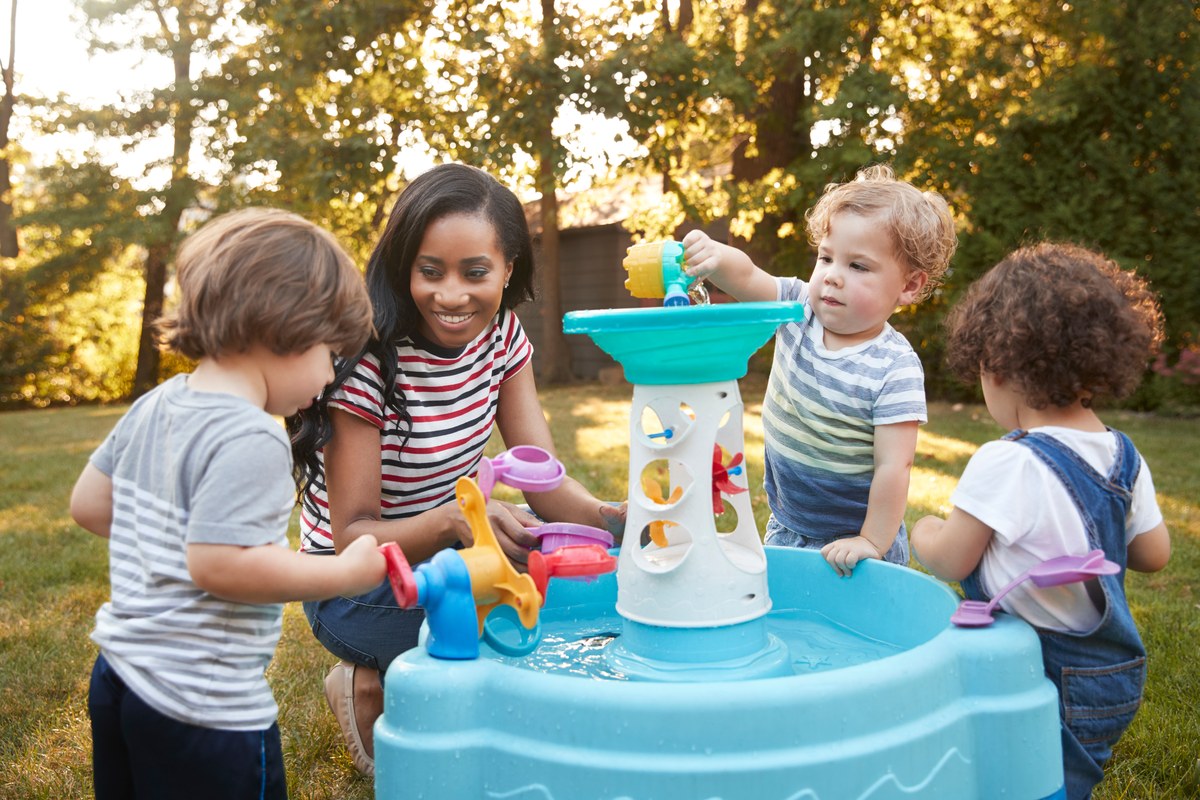
The biggest change this year is on your monthly bill. From 1 July 2026 the government lowered the maximum fees for förskola (preschool) and fritidshem (after-school centre). Under the maxtaxa (maximum fee) system, no household now pays more than 1,547 kronor a month for its first child in preschool, according to Skolverket (the Swedish National Agency for Education). A household with an income below 10,001 kronor a month pays nothing at all.
You also do not have to wait for paperwork. A child needs no personnummer (personal identity number) or samordningsnummer (coordination number) to get a place, and the lack of one is no reason for the kommun (municipality) to delay, Skolverket says. Register each child with Skatteverket (the Swedish Tax Agency), as part 3 explains, and apply for places at the same time.
How the Swedish system fits together
Your home municipality is responsible for offering places, and in the compulsory stages education is free.
| Stage | Age | What it costs |
|---|---|---|
| Förskola (preschool) | From age 1 until the child starts preschool class | Fee under the maxtaxa; at least 525 hours a year free from the autumn term of the year the child turns 3 |
| Förskoleklass (preschool class) | From the autumn term of the year the child turns 6, when skolplikt (compulsory schooling) begins | Free, including school meals |
| Grundskola (compulsory school) | Years 1–9 | Free, including school meals |
| Fritidshem (after-school centre) | From preschool class up to age 13 | Fee under the maxtaxa |
| Gymnasieskola (upper secondary school) | After compulsory school | The municipality decides whether meals are free |
Source: Skolverket and Informationsverige, the county administrative boards’ information service for newcomers, read 22 September 2026.
If your child has spent only a short time in Sweden, you can ask to postpone compulsory schooling by a year; the child is then offered preschool instead. A reform is also coming: on 18 June 2025 the Riksdag (parliament) decided on a ten-year compulsory school from autumn 2028, when preschool class becomes a new year 1 and school runs to year 10.
Preschool: the right to a place, and the four-month rule
Your home municipality must offer preschool to children who live in Sweden. From the age of one, a child is entitled to a place to the extent the parents need it for work or studies, or if the child has its own need. Children under one generally have no right to a place unless they need special support.
Once you have registered a wish for a place in a municipal preschool, the municipality must offer one within four months – sooner if the child needs special support. A private preschool can mean a longer wait, according to Informationsverige.
| Your situation | What your child is entitled to |
|---|---|
| You work or study | Preschool from age 1, as much as your work or studies require |
| You are unemployed, or on parental leave with another child | At least 3 hours a day or 15 hours a week from age 1 – your municipality may offer more |
| Your child is under 1 | Normally no place, unless the child needs special support |
| Your child turns 3 this year | At least 525 free hours a year from the autumn term, whatever you do |
Source: Skolverket, read 22 September 2026.
What preschool and after-school care cost from 1 July 2026
Fees are a percentage of the household’s income, with a cap. From 1 July 2026, 10,000 kronor is deducted from every household’s fee-basis income before the percentage is applied, and the highest income that counts is 51,560 kronor a month.
| Child | Preschool: maximum per month | Fritidshem: maximum per month |
|---|---|---|
| First child | 3 % of income, at most 1,547 kronor | 2 % of income, at most 1,031 kronor |
| Second child | 2 %, at most 1,031 kronor | 1 %, at most 516 kronor |
| Third child | 1 %, at most 516 kronor | 1 %, at most 516 kronor |
| Household income below 10,001 kronor | No fee | No fee |
Source: Skolverket, read 22 September 2026.
To compensate municipalities, the government raised the state grant for the maxtaxa by 1 billion kronor for 2026 and has announced 1.5 billion kronor from 2027, according to the Government Offices of Sweden. Example: Anna Andersson studies Swedish, her partner is looking for work and the household earns less than 10,001 kronor a month. Their three-year-old’s place costs nothing.
Every municipality must offer fritidshem to pupils in preschool class, compulsory school and anpassad grundskola (adapted compulsory school), including pupils at independent schools without one. It normally stays open during school holidays.
Who to contact
| Question | Where to go |
|---|---|
| Preschool, fritidshem and school places | Your home municipality – Stockholm 08-508 00 508, Gothenburg 031-365 00 00, Malmö 040-34 10 00 |
| Registering each child | Skatteverket, 0771-567 567 |
| Child benefit | Försäkringskassan (the Swedish Social Insurance Agency), 0771-524 524 |
Source: Stockholms stad, Göteborgs Stad, Malmö stad, Skatteverket and Försäkringskassan, read 22 September 2026.
Starting school as a newly arrived pupil
Swedish law has a term for your child’s situation. A pupil counts as nyanländ (newly arrived) if they have lived abroad, now live in Sweden and started school here after the start of the autumn term in the year they turn seven. The status ends after four years of schooling in Sweden.
The school must assess your child’s knowledge promptly and decide on year group and class within two months. A förberedelseklass (preparatory class) may cover only part of the teaching, and never for more than two years.
| Support | Who gets it | The rule |
|---|---|---|
| Studiehandledning (study guidance in the mother tongue) | Any pupil who needs it, in compulsory and upper secondary school | Newly arrived pupils starting in years 7–9 have a stronger right |
| Modersmålsundervisning (mother-tongue tuition) | Pupils with a guardian whose mother tongue is not Swedish, if the language is spoken daily at home and the pupil knows it | Arranged if at least 5 pupils want it and a teacher is available; normally at most 7 school years |
| Förberedelseklass | Newly arrived pupils, if the principal decides | Part of the teaching only, at most 2 years |
| Placement | Newly arrived pupils | Year and class decided within 2 months |
Source: Skolverket, read 22 September 2026.
For the national minority languages one pupil is enough, and the seven-year limit does not apply to them or to the Nordic languages. None of this depends on residence status: children seeking asylum, with temporary protection but not registered, or living here without a permit have the same right to preschool and school. Asylum-seeking children should start school within one month of arriving.
Upper secondary, international schools and school meals
Teenagers with little Swedish usually start on språkintroduktion (language introduction), an introductory programme in upper secondary school that focuses on Swedish and the subjects needed to move on, with at least 23 hours of teaching a week guaranteed. Skolverket’s interpretation is that asylum seekers on it have no right to move to a national programme after turning 18, although the municipality may offer it.
Compulsory school is free, and pupils get nutritious school meals without paying. Upper secondary school has no such guarantee in law: the home municipality decides whether meals are free.
Independent international schools may charge a fee to cover reasonable extra costs of following another country’s curriculum or an international one such as the IB, or of teaching pupils in Sweden temporarily. Ask what the fee covers.
What to do now
| Step | What | When |
|---|---|---|
| 1 | Register each child with Skatteverket | When you arrive – see part 3 |
| 2 | Apply for a municipal preschool place | As soon as you have an address; the offer comes within 4 months |
| 3 | Ask for a school place – no personnummer needed | Straight away |
| 4 | Ask about studiehandledning and mother-tongue tuition | At the first meeting; placement within 2 months |
| 5 | Apply for fritidshem if you work or study | With the school place |
| 6 | Give Försäkringskassan details of children under 16 for barnbidrag (child benefit) | Once registered – see part 9 |
Source: Skolverket, Skatteverket and Försäkringskassan, read 22 September 2026.
Official sources
The official pages this guide is based on, read 22 September 2026. Links open the authority’s own website.
- Skolverket · skolverket.se
- Skolverket · skolverket.se
- Regeringen.se · regeringen.se
- Skolverket · skolverket.se
- Regeringen.se · regeringen.se
- Skolverket · skolverket.se
- Skolverket · skolverket.se
- Skolverket · skolverket.se
- Skolverket · skolverket.se
- Informationsverige.se · informationsverige.se
Relocate in Europe provides general information, not legal or financial advice for your individual situation. Check with the authority named above before you act – rules change, and your case may differ.