The first 30 days in Denmark – the steps in order, from SIRI to CPR number and MitID
Last updated 25 September 2026Rules checked every MondayOfficial sourcesSources & methodology →
Your first 30 days in Denmark decide how fast everything else falls into place, because almost every office, bank and doctor will ask for the same number. Here is the order that works: the right to stay, a real address, the CPR number, then tax card, MitID and NemKonto.
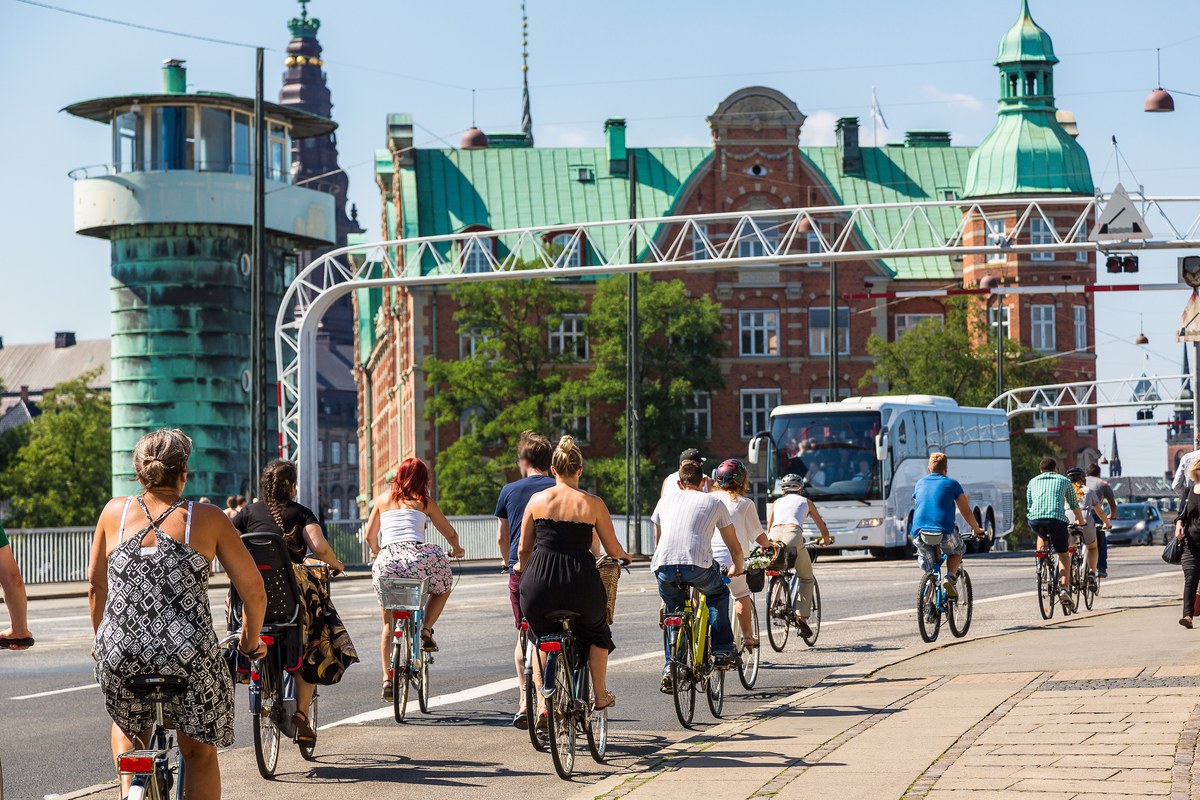
If your first 30 days in Denmark fall in 2026, two changes matter from the start. For applications since 1 January 2026, a job under the Pay Limit Scheme, the work permit route for high salaries, must pay at least DKK 552,000 a year. And since 9 July 2026, the Digital Post app for official letters no longer works on older Android phones that cannot upgrade to HyperOS.
The order itself has not changed. Almost everything hangs on your CPR-nummer (personal identification number), which you can only get after you arrive and once you actually live at a Danish address. So: the right to stay, then the home, then the number.
What should you do in your first 30 days in Denmark?
Life in Denmark, the English-language guide on Denmark's public citizen portal, says the arrival steps apply 'whether you are from a Nordic country, an EU country or a non-EU country'. In practice:
| Step | What | Where |
|---|---|---|
| 1 | Right to stay: EU residence document (EU/EEA/Swiss), permit (others) or nothing (Nordic) | SIRI (the Danish Agency for International Recruitment and Integration) |
| 2 | A home you actually live in, where you may register | Your landlord – see part 5 |
| 3 | Register your address and get a CPR number, in person | Borgerservice (Citizen Service) or an International Citizen Service centre |
| 4 | Apply for MitID, the national eID | At the CPR appointment, your bank or Citizen Service |
| 5 | Get your tax card | Skattestyrelsen (the Danish Tax Agency) |
| 6 | Open a bank account and make it your NemKonto | Your bank, then the NemKonto self-service |
| 7 | Choose a GP; the yellow health card follows by post | At registration |
Source: Life in Denmark, SIRI, International House Copenhagen and Skattestyrelsen, read 23 September 2026.
Do you need a permit or an EU residence document?
EU, EEA and Swiss citizens may enter freely and start work on arrival. Staying longer than three months? Apply for an EU residence document (registration certificate) within three months of entering – six if you are looking for work. You apply online, then appear in person at a SIRI branch office within 30 days, or SIRI treats the application as withdrawn. There is no fee, and SIRI lists the normal processing time as 0 days. Do not skip it: the municipality will only give you a CPR number on seeing the document.
Nordic citizens – from Finland, Iceland, Norway and Sweden – need no residence document or permit. Everyone else needs a residence and work permit, normally before the first working day; part 2 explains the schemes.
Week one: where do you register for a CPR number?
You cannot apply for a CPR number before you have found a place to live and actually live there. How long you must live at an address for it to count as permanent varies between municipalities, but is usually 1 to 3 months. The City of Copenhagen advises checking that your landlord allows you to register.
Registration is in person, at a Borgerservice or an International Citizen Service (ICS) centre, where you can deal with several authorities in one place. Part 3 lists the documents to bring.
| City | CPR number and health card | SIRI (EU residence document and permits) |
|---|---|---|
| Copenhagen | International House Copenhagen (ICS East), Nyropsgade 1 | SIRI's EU residence desk at International House; SIRI Copenhagen, Carl Jacobsens Vej 39, Valby, by appointment only |
| Aarhus | Citizen Service at Dokk1, Hack Kampmanns Plads 2 – book an appointment | SIRI Aarhus, Dokk1 |
| Odense | International House Odense, Østre Stationsvej 15 | SIRI Odense, same address (Borgernes Hus) |
| Aalborg | International House North Denmark, Rantzausgade 6 | SIRI Aalborg, Badehusvej 7 |
| Esbjerg and Sønderborg | ICS Esbjerg and ICS Sønderborg | SIRI Esbjerg, Torvegade 74; SIRI Sønderborg, Holger Drachmanns Plads 5 |
| Elsewhere | Your municipality's Citizen Service | The nearest SIRI office |
Source: Life in Denmark, SIRI, the City of Aarhus and the international houses in Copenhagen, Odense and Aalborg, read 23 September 2026.
Take an invented example: Anna, a Spanish engineer with a job in Odense. She applies online for her EU residence document, visits SIRI in Borgernes Hus within 30 days, then registers for her CPR number at International House Odense, in the same building, once she has moved into her flat.
International House Copenhagen handles the EU residence document, CPR number, health card, MitID, tax card and U2 form (for transferring unemployment benefit) under one roof, free of charge. It is open Monday 09:00–15:00, Wednesday 11:00–17:00, Thursday 09:00–15:00 and Friday 09:00–14:00, and closed on Tuesdays. Phone 33 66 10 00.
Weeks two and three: how do you get a tax card and a NemKonto?
Without a skattekort (tax card), your employer must withhold 55 per cent tax, so get one before your first payday – though Skattestyrelsen cannot issue it more than one month before your job starts.
The fastest route is TastSelv (E-tax). With a health card showing your CPR number, a registered Danish address and MitID or an E-tax password, you generate the tax card yourself – instantly, or within 5 days if the agency must approve it. The digital form 04.063 takes about 2 weeks. Part 7 covers tax.
Then the bank. Life in Denmark's pages differ on whether a bank needs your tax card first, so getting it beforehand can save a second trip. Every resident must also have a NemKonto, the ordinary bank account where public authorities pay tax refunds, child benefits and pensions. You need a CPR number to register it and MitID to log in, and it currently takes about a week. Part 4 has the details.
Weeks three and four: MitID, Digital Post and the yellow card
MitID is your login for public self-service, from changing address to choosing a doctor. Life in Denmark lists the conditions as a CPR number, an age of at least 15 and meeting the ID requirements. Once you have the CPR number, letters from public authorities arrive as Digital Post, and reading them is your obligation.
Your yellow sundhedskort (health insurance card) is posted to your Danish address. Life in Denmark says it takes about 2 to 3 weeks, International House Copenhagen says 4, so allow a month. Once registered, you choose a GP (family doctor). Seeing your GP is free, and so is hospital treatment with a referral. Part 8 covers healthcare.
In Copenhagen, registering your residence also brings a referral letter to a Danish language centre; from receiving it, you have 30 days to tell the centre you choose. Part 11 covers learning Danish.
Mistakes that cost you time or money
| Mistake | What happens | How to avoid it |
|---|---|---|
| Missing SIRI's 30-day deadline | Your EU residence application counts as withdrawn | Plan the office visit when you apply online |
| Starting work without a tax card | Your employer withholds 55 per cent tax | Apply once you are within one month of your start date |
| Renting where you cannot register | No CPR number – so no health card, bank account or NemKonto | Ask the landlord before you sign |
| Forgetting the car | A car on foreign plates must be registered in Denmark no later than 30 days after you move | Start in week one – see part 12 |
Source: SIRI, Skattestyrelsen, the City of Copenhagen and Life in Denmark, read 23 September 2026.
What to do now
| Step | What | When |
|---|---|---|
| 1 | EU/EEA/Swiss: apply online for the EU residence document, then visit SIRI | Within 3 months of arriving (6 if job-seeking); the visit within 30 days |
| 2 | Secure a home where you may register | Before the CPR appointment |
| 3 | Register for a CPR number and ask for MitID | As soon as you live at the address |
| 4 | Get your tax card; questions to Skattestyrelsen on 72 22 27 80 | No earlier than 1 month before your job starts |
| 5 | Open a bank account and designate your NemKonto | Once you have a CPR number and MitID |
| 6 | Read your Digital Post and watch for the yellow card | From registration; the card takes 2 to 4 weeks |
Source: SIRI, Life in Denmark and Skattestyrelsen, read 23 September 2026.
Official sources
The official pages this guide is based on, read 23 September 2026. Links open the authority’s own website.
- Life in Denmark · lifeindenmark.borger.dk
- Skattestyrelsen · skat.dk
- Skattestyrelsen · skat.dk
- NemKonto (Agency for Digital Government) · nemkonto.dk
- International House Copenhagen (City of Copenhagen) · international.kk.dk
- Skattestyrelsen · skat.dk
Relocate in Europe provides general information, not legal or financial advice for your individual situation. Check with the authority named above before you act – rules change, and your case may differ.