Everyday life in Denmark – 112, a three-day crisis kit, cash rules, alcohol limits and work culture
Last updated 25 September 2026Rules checked every MondayOfficial sourcesSources & methodology →
Denmark runs on cards and apps, yet shops must take your cash until 22:00. The authorities want your household able to cope alone for three days. Here is everyday life in Denmark in practice: emergency numbers, crisis preparedness, cash, holidays, alcohol limits and working culture.
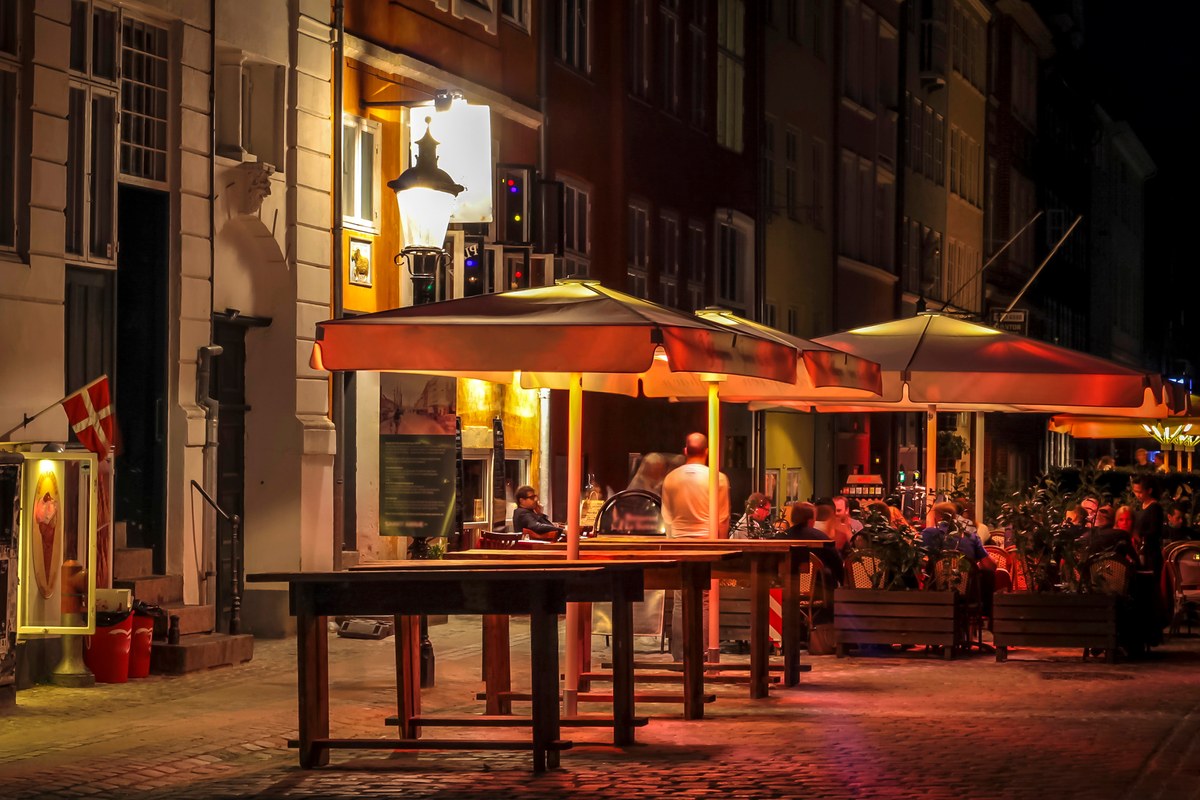
Everyday life in Denmark has changed in small but real ways since 2024. Store Bededag (Great Prayer Day) stopped being a public holiday on 1 January 2024. Since 1 September 2026, Erhvervsstyrelsen (the Danish Business Authority) has been in charge of enforcing age checks on alcohol sales. And Danmarks Nationalbank, the central bank, stopped taking recalled banknotes at its own redemption points after 31 May 2026.
What are the emergency numbers in Denmark?
112 reaches the police, the fire brigade, ambulances and the environmental emergency service. It is free from any landline or mobile, works across the country and the whole EU, and every operator must let you call it even with no credit or a blocked phone. Calls are recorded. Ring only for acute help: the operator asks what happened, where, when, how many are injured and which number you are calling from, then passes you on.
| Number | What it is for |
|---|---|
| 112 | Emergencies: police, fire brigade, ambulance, environmental emergency service |
| 114 | The police service number for non-urgent matters; +45 114 from abroad |
| 1813 | Medical help when your GP is closed, Capital Region; acute injuries around the clock |
| 1818 | Out-of-hours doctor (lægevagt), Region Zealand |
| 70 11 07 07 | Out-of-hours doctor, Region of Southern Denmark |
| 70 11 31 31 | Out-of-hours doctor, Central Denmark Region: weekdays 16–08, weekends and public holidays around the clock |
| 70 15 03 00 | Out-of-hours doctor, North Denmark Region |
| 82 12 12 12 | Giftlinjen (the poison information line) |
Source: the Danish Emergency Management Agency, the Danish Police and the five regions, read 23 September 2026.
The out-of-hours lines are for when you fall ill outside your own GP's opening hours; part 8 explains Danish healthcare. In the Capital Region you can also text 'Opkald' to 1813 to ask for a call back.
How should you prepare for a crisis in Denmark?
Danish authorities recommend that every household can manage on its own for 3 days in a crisis, so that they can focus on helping vulnerable people and restoring normality. The advice is written by Styrelsen for Samfundssikkerhed (the Danish Agency for Societal Security), based on the Emergency Management Act, and comes down to a short list:
| What to store | How much |
|---|---|
| Drinking water | 3 litres per person per day |
| Food | Enough for 3 days |
| Medicine and first aid | What your household needs |
| Hygiene | Basic hygiene items |
| Warmth | A way to keep warm |
| Other essentials | Light, batteries and power banks |
| A way to keep informed | An FM radio powered by batteries, a hand crank or solar cells |
Source: Styrelsen for Samfundssikkerhed, via Denmark's public citizen portal, read 23 September 2026.
The agency's online beredskabsberegner (preparedness calculator) works out exactly how much your household should store.
If a serious, life-threatening danger hits your area, phones there automatically receive alerts from the national warning service, spelled SIRENEN with an exclamation mark in place of the I; the rule is 'Stop. Læs. Reagér' (stop, read, react). When the physical sirens sound, go indoors and look for information from DR or TV 2. Rigspolitiet (the National Police) sends the alerts, sounds the sirens and issues beredskabsmeddelelser (preparedness announcements), according to Beredskabsstyrelsen (the Danish Emergency Management Agency), which runs the systems.
Everyday life in Denmark: can you still pay cash?
Yes – in any physical shop that takes cards, for most of the day. Cash is fading – according to Danmarks Nationalbank, Danes' use of cash for payments roughly halved between 2017 and 2023 – but the kontantregel (cash rule) in section 81 of the Payments Act protects you:
| Situation | Rule |
|---|---|
| A physical shop that takes cards or payment apps | Must also accept cash from 06:00 to 22:00 |
| After 22:00 | The shop may refuse cash |
| An area with a high robbery risk | Shops only have to accept cash from 06:00 to 20:00; the Minister for Business decides which areas |
| The shop prefers a particular card | It may offer you a discount for using it |
| Illegal card fees, or no free choice between cards such as Dankort and Visa | Complain to Konkurrence- og Forbrugerstyrelsen (the Danish Competition and Consumer Authority), 41 71 50 00 |
Source: Konkurrence- og Forbrugerstyrelsen's consumer portal (last updated 27 April 2023), read 23 September 2026.
Keep some cash anyway. Nationalbanken recommends it as a backup, and its analysis of 26 June 2026 found more people holding cash even as fewer pay with it. Leave your kroner at home when you travel: Danish cash cannot be exchanged in most other countries. Recalled banknotes, including the withdrawn 1,000-krone note, could be used in shops until 31 May 2025 and handed in at Nationalbanken's redemption points until 31 May 2026; if you still have some, call Nationalbanken on 33 63 63 63. New banknotes, from the British producer De La Rue, are due from 2028.
Public holidays and alcohol: what has changed?
One public holiday has gone: Store Bededag was abolished as a public holiday with effect from 1 January 2024. We could not verify an official list of 2026 dates, so check your employer's calendar. Some public services also treat Grundlovsdag (Constitution Day), 5 June, like a holiday:
| Service | Public holidays |
|---|---|
| MitID Support (+45 33 98 00 10) | 10:00–16:00, also on Constitution Day; 10:00–14:00 on 24 and 31 December |
| Digital Post Support (+45 33 98 00 33) | 10:00–16:00 at weekends and on holidays |
| SIRI (the Danish Agency for International Recruitment and Integration), phone lines | Closed on public holidays and between Christmas and New Year |
| Færdselsstyrelsen (the Danish Road Traffic Authority) | Closed on public holidays, Constitution Day and Ascension Day, and between Christmas and New Year |
Source: MitID, Life in Denmark (Agency for Digital Government), SIRI and Færdselsstyrelsen, read 23 September 2026.
As for your own leave, employees accrue five weeks of paid holiday a year (part 6).
Alcohol has age limits in shops. Under the act banning sales of tobacco and alcohol to people under 18, shops may not sell drinks of 1.2 per cent alcohol or more to anyone under 16, or drinks of 16.5 per cent or more to anyone under 18. An amending act in force since 1 September 2026 leaves those limits unchanged. It moves enforcement of age checks from Sikkerhedsstyrelsen (the Danish Safety Technology Authority) to Erhvervsstyrelsen and extends undercover test purchases by mystery shoppers until 30 June 2028. Moving your household here? Alcohol is excluded from the duty-free allowance for personal belongings (part 7).
What is Danish working culture like?
According to Workindenmark's official guidance for foreign workers, a standard working week is 37 hours, usually Monday to Friday. The same guidance, last updated on 22 January 2026, describes a workplace like this:
| What you will notice | What it means |
|---|---|
| A flat, often informal hierarchy | Your manager may sit among colleagues rather than in a separate office |
| First names for everyone | Managers included |
| Teamwork with individual accountability | You work in a team but answer for your own tasks |
| Deadlines rather than fixed hours | Punctuality is about delivering on time |
| Proactive problem-solving | You are expected to take the initiative |
| No dress code | People talk informally to each other |
Source: Workindenmark, read 23 September 2026.
Life in Denmark's facts page, updated on 12 June 2026, names trust, community and the welfare state as key reasons Danes come out on top of global happiness surveys, and notes that the average Dane pays about 50 per cent of their income in tax to fund free healthcare, schooling and pensions. Part 7 covers your own tax.
What to do now
| Step | What | When |
|---|---|---|
| 1 | Save 112, 114 and your region's out-of-hours number in your phone | Today |
| 2 | Store water, food, medicine, light and an FM radio for 3 days | In your first month |
| 3 | Keep some cash at home as a backup, and leave kroner behind when you travel | From now on |
| 4 | Still holding recalled banknotes? Call Nationalbanken, 33 63 63 63 | As soon as possible |
| 5 | Check your employer's holiday calendar – Store Bededag is no longer a public holiday | Before you plan time off |
| 6 | Read Workindenmark's guidance on Danish working culture | Before your first day |
Source: Denmark's public citizen portal, Danmarks Nationalbank and Workindenmark, read 23 September 2026.
Official sources
The official pages this guide is based on, read 23 September 2026. Links open the authority’s own website.
- forbrug.dk · forbrug.dk
- nationalbanken.dk · nationalbanken.dk
- nationalbanken.dk · nationalbanken.dk
- nationalbanken.dk · nationalbanken.dk
- borger.dk · borger.dk
- brs.dk · brs.dk
- brs.dk · brs.dk
- borger.dk · borger.dk
- workindenmark.dk · workindenmark.dk
- lifeindenmark.borger.dk · lifeindenmark.borger.dk
Relocate in Europe provides general information, not legal or financial advice for your individual situation. Check with the authority named above before you act – rules change, and your case may differ.