Childcare and school in Denmark – the daycare guarantee, folkeskole, international schools and SFO
Last updated 25 September 2026Rules checked every MondayOfficial sourcesSources & methodology →
Your municipality must find a daycare place for every child over 26 weeks, and school is free from the August of the year your child turns 6. Here is how childcare and school in Denmark work for newcomers – 2026 prices and subsidies, reception classes, international schools and SFO.
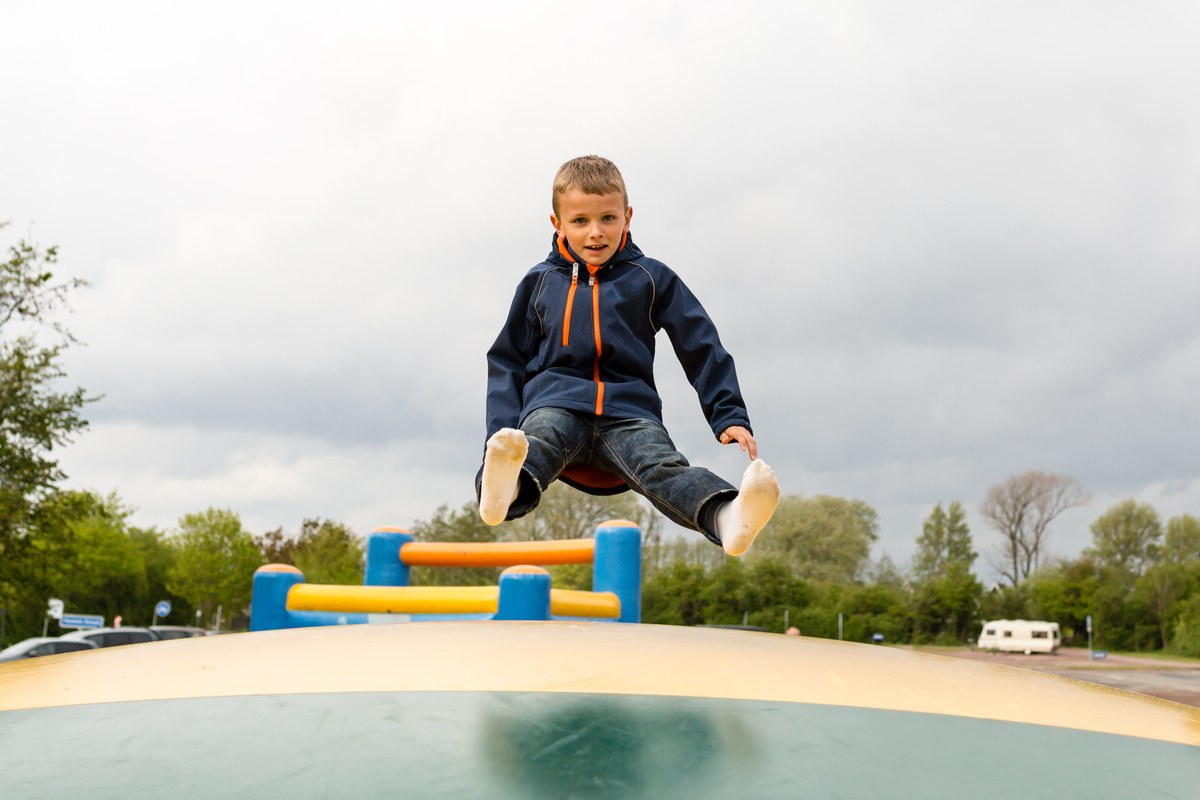
Childcare and school in Denmark rest on two firm rules. Your kommune (municipality) must offer a daycare place to every child over 26 weeks, and school starts in the calendar year your child turns 6. What moves is the money: the income limits for daycare subsidy are set for 2026, and Copenhagen's current daycare prices have applied since 1 May 2026. And under the latest amendment to the Primary and Lower Secondary Schools Act, kindergarten class now has a minimum of 1,110 teaching hours.
The rules below come from Life in Denmark, the English-language guide on Denmark's public citizen portal, updated in June and July 2026, and from the cities of Copenhagen and Aarhus.
How does childcare in Denmark work?
If you live in Denmark legally, your children have guaranteed childcare: the municipality must give every child over 26 weeks a place in age-appropriate daycare until they start school. Apply early. If you ask for a place only just before or after your child turns 26 weeks, the municipality has another 4 weeks to offer one. You apply online with MitID, your digital ID (part 4).
| Type of daycare | Danish name | Age |
|---|---|---|
| Family daycare with a childminder | Dagpleje | Typically under 3 – one childminder looks after up to 5 children, or up to 10 with two or more childminders |
| Nursery | Vuggestue | 0–3 |
| Kindergarten | Børnehave | 3–6 |
| Combined nursery and kindergarten | Integreret institution | 0–6 |
Source: Life in Denmark (Ministry of Children, Senior Citizens and Housing), read 23 September 2026.
There are alternatives. From 24 weeks until school start, you can choose a subsidy for private childcare instead of a municipal place. On parental leave, you can get a part-time place of 30 hours a week at a reduced price. And combination care – a part-time place plus a flexible childminder – is possible if the flexible part averages at least 10 hours a week over at least 4 weeks.
If you disagree with a childcare decision, complain to the municipality within 4 weeks of receiving it. It must look at the case again within 4 weeks and, if it keeps its decision, forward your complaint to the Board of Appeal.
What does daycare cost in Denmark in 2026?
Parents pay at most 25 per cent of the operating costs of public childcare; the municipality pays the rest. Copenhagen's monthly rates – daycare prices valid from 1 May 2026, after-school prices for 2026 – show the level in the capital:
| Copenhagen, per month | Price | Price with lunch |
|---|---|---|
| Nursery or kindergarten, child under 3 years 1 month | DKK 3,555 without lunch | DKK 4,289 |
| Nursery or kindergarten, from 3 years 1 month | DKK 1,988 without lunch | DKK 2,816 |
| After-school care (SFO) | DKK 2,042; July is free | – |
| After-school club | DKK 476; July is free | – |
Source: City of Copenhagen, read 23 September 2026.
The lower daycare rate starts on the 1st of the month your child turns 3 years and 1 month. Your bill can fall further, because the income-based subsidy depends on what your household earns:
| Household income, 2026 | Income-based subsidy |
|---|---|
| Up to DKK 218,101 | Full – it covers all out-of-pocket fees |
| DKK 218,101 to 677,499 | Partial |
| DKK 677,500 and over | None |
Source: Life in Denmark, read 23 September 2026.
The limits rise by DKK 7,000 for each additional child under 18 in the household and by DKK 76,317 for single parents – amounts Life in Denmark still labels as 2025 figures. Two further reductions exist. Sibling subsidy is automatic, with no application: you pay full price for the most expensive place and half for the cheapest. A treatment subsidy halves the fee for a child with a significant and permanent physical or mental impairment who attends daycare for therapeutic reasons.
An illustrative example: Anna moves to Copenhagen with a two-year-old and a four-year-old. She pays the nursery place, DKK 3,555 a month without lunch, in full, and the kindergarten place, DKK 1,988, at half price. In Copenhagen, the sibling discount does not cover after-school clubs.
When does school start in Denmark?
As a rule, your child starts school in August of the calendar year they turn 6, in grade 0, called børnehaveklasse (kindergarten class). Kindergarten class is mandatory for all children, and pupils usually finish in grade 9. The folkeskole (public school) is free.
| Situation | Rule |
|---|---|
| Normal start | August of the calendar year your child turns 6, in grade 0 |
| Starting a year later | Needs approval from the municipal council; decided in the calendar year the child turns 6, no later than the start of the school year on 1 August |
| Starting earlier | At the earliest in the calendar year in which the child turns 5 before 1 October, if the school, the daycare and you agree the child is ready |
| Choice of school | Free – a public school outside your district, or in another municipality, if there is space |
| Complaint about the school start | First to the head of the school, then to the municipality within 4 weeks; no other authority hears appeals |
Source: Life in Denmark (Ministry of Education), read 23 September 2026.
What if my child does not speak Danish?
A modtagelsesklasse (reception class) lets a child who does not speak Danish learn basic Danish before moving to a regular class. Reception classes are part of the public school system, so they cost nothing, and your child can start at any time during the school year.
Arrangements are local. In Aarhus, children with little or no Danish must attend a reception class before they join an ordinary class in a municipal school. Copenhagen organises its reception classes by age, and a child can spend at most two years in one:
| Copenhagen reception class | Ages |
|---|---|
| Indskoling | 6–9 |
| Mellemtrin | 9–13 |
| Udskoling | 13–16 |
| Classes for older pupils | 15–17 |
Source: City of Copenhagen, read 23 September 2026.
Are there international schools in Denmark?
Yes. In Copenhagen, European School Copenhagen (Europaskolen) is the only public international school, and the city's private international schools teach in English, French, German or Danish. Here is how the options compare:
| School option | Cost | Good to know |
|---|---|---|
| Local folkeskole | Free | Free choice of public school, if there is space |
| Reception class | Free | Enrolment at any time in the school year |
| European School Copenhagen | Free | Limited places; the school manages admission |
| Private international school in Copenhagen | Monthly fee | No financial support from the City of Copenhagen |
Source: Life in Denmark and City of Copenhagen, read 23 September 2026.
How does SFO after-school care work?
SFO (after-school care) is for children from about 6 to 10 – from kindergarten class to class 3. You register for it at the same time as you enrol your child in school. If your household earns less than DKK 677,500 a year (2026), you can apply to the municipality for a full or partial free place, and the limit is higher for single parents and for each additional child under 18.
Dental care is free for children too: municipal child and youth dental care runs until 18, and until 22 for young people who turned 18 after 1 January 2022. Children under 15 are covered by their parents' health insurance (part 8).
What to do now
| Step | What | When |
|---|---|---|
| 1 | Apply for a daycare place with MitID | As early as you can – ideally well before your child turns 26 weeks |
| 2 | Check your municipality's prices and whether you qualify for income-based subsidy | Before the place starts |
| 3 | Enrol your child in school, and in SFO at the same time | For August of the year your child turns 6 |
| 4 | Ask the municipality about a reception class if your child does not speak Danish | Any time in the school year |
| 5 | Contact an international school directly, if you want one | Before you choose where to live |
| 6 | Complain to the municipality if you disagree with a decision | Within 4 weeks of receiving it |
Source: Life in Denmark and City of Copenhagen, read 23 September 2026.
Official sources
The official pages this guide is based on, read 23 September 2026. Links open the authority’s own website.
- Life in Denmark · lifeindenmark.borger.dk
- Life in Denmark · lifeindenmark.borger.dk
- Life in Denmark · lifeindenmark.borger.dk
- Life in Denmark · lifeindenmark.borger.dk
- City of Copenhagen · international.kk.dk
- City of Copenhagen · international.kk.dk
- City of Copenhagen · international.kk.dk
- City of Aarhus · international.aarhus.dk
Relocate in Europe provides general information, not legal or financial advice for your individual situation. Check with the authority named above before you act – rules change, and your case may differ.