Public holidays in Switzerland 2026 – plus cash, Sunday rules and emergency numbers
Last updated 25 September 2026Rules checked every MondayOfficial sourcesSources & methodology →
Switzerland has exactly one national holiday, shops that shut on Sundays and a cash debate that went to the vote in 2026. Here are the public holidays for 2026 in two cantons, the Sunday and quiet-time rules, how people pay and the numbers to call in an emergency.
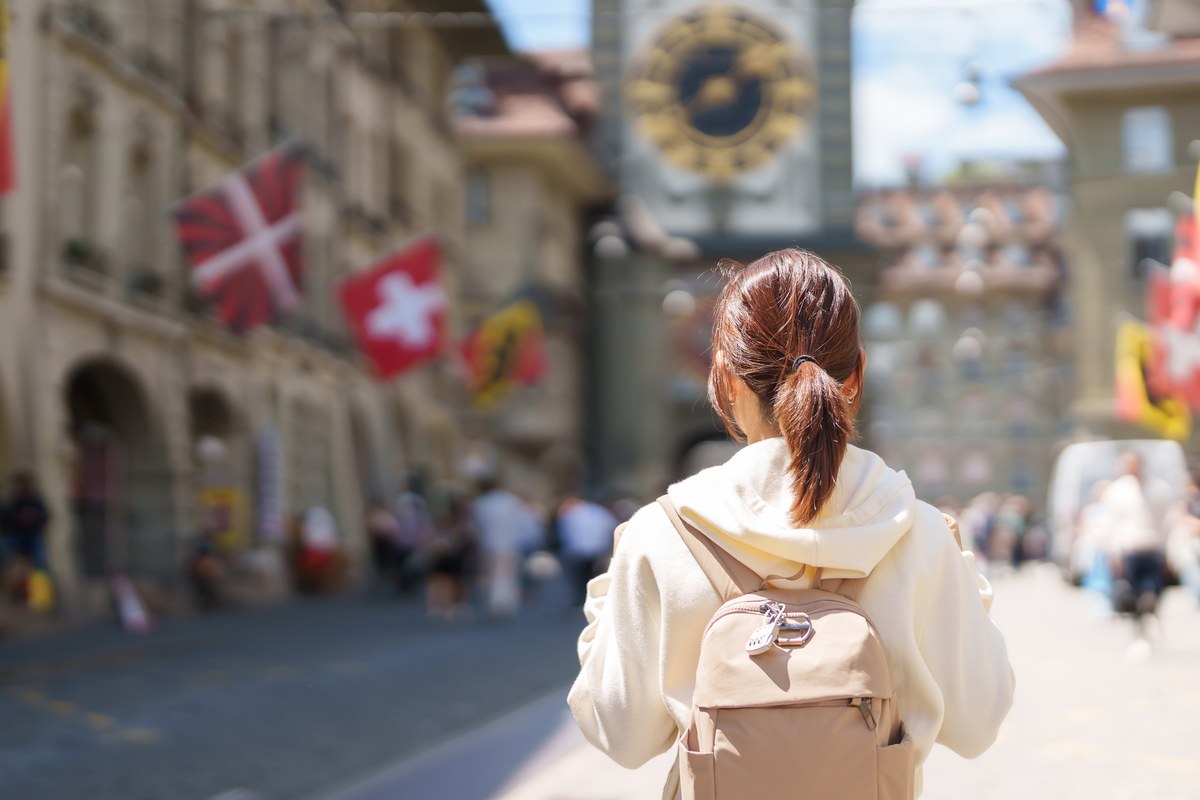
Public holidays in Switzerland are mostly set by the cantons – the first lesson of everyday life here. 1 August, Swiss National Day, is the only national public holiday; each canton can add up to eight more. Two votes in 2026 touched daily life too: on 8 March, voters accepted a federal decree on the Swiss currency and the supply of cash, and on 14 June the Canton of Geneva approved a change to its law on Sunday shop opening.
Which public holidays does Switzerland have in 2026?
Under the Labour Act, 1 August counts as a Sunday, and cantons may treat at most eight further holidays a year as Sundays, even setting them differently for parts of the canton. According to an older list of public holidays from the Federal Office of Justice, New Year's Day, Ascension Day and Christmas Day are the only other holidays recognised in all cantons. The rest depends on where you live.
| Holiday | Date in 2026 | Canton of Zurich | Canton of Geneva |
|---|---|---|---|
| New Year's Day | Thursday 1 January | Yes | Yes |
| Good Friday | 3 April | Yes | Yes |
| Easter Monday | 6 April | Yes | Yes |
| 1 May | 1 May | Yes | No |
| Ascension Day | 14 May | Yes | Yes |
| Whit Monday | 25 May | Yes | Yes |
| National Day (Bundesfeiertag / Fête nationale) | Saturday 1 August | Yes | Yes |
| Jeûne genevois | Thursday 10 September | No | Yes |
| Christmas Day | Friday 25 December | Yes | Yes |
| St Stephen's Day | 26 December | Yes | No |
| Restoration of the Republic | Thursday 31 December | No | Yes |
Source: Canton of Geneva (official public holidays 2026, updated 18 August 2026) and Canton of Zurich rest-day and shop-opening act (Ruhetags- und Ladenöffnungsgesetz), read 23 September 2026.
In 2026 the City of Zurich also gives its own staff 2 January (Berchtoldstag) and the afternoons of Sechseläuten (20 April) and Knabenschiessen (14 September) off. These are local customs, not cantonal public holidays.
Public holidays and your pay
If you are paid monthly, you keep your full salary on public holidays. If you are paid by the hour, 1 August is the only holiday your employer must pay by law; others only if your contract or collective agreement says so, according to SECO (State Secretariat for Economic Affairs). A holiday on a Saturday or Sunday gives no replacement day, and a holiday during your annual leave does not count as a day of leave. For a religious holiday your canton does not recognise, you may stop work if you tell your employer at least three days in advance.
What is open on Sundays, and when must you keep quiet?
Federal law bans employing staff from Saturday 23:00 to Sunday 23:00, and night work between 23:00 and 06:00 is generally prohibited too. Exceptions need a permit or apply to sectors such as health, hospitality, kiosks and bakeries. Cantons may name at most four Sundays a year when shop staff can work without a permit, such as pre-Christmas Sunday openings. Opening hours themselves are cantonal.
| Shop rule | Canton of Zurich | Canton of Geneva |
|---|---|---|
| Monday to Saturday | No time limits | Until 19:00 Monday to Wednesday, 21:00 Thursday, 19:30 Friday, 18:00 Saturday |
| Sundays and public holidays | Closed, except shops at public-transport hubs and pharmacies | Bakeries may open on Saturday and Sunday until 19:00 |
| Exceptions | Communes may allow openings on up to four public rest days a year, never on high holidays | Sunday-opening amendment accepted on 14 June 2026 with 52.78 per cent yes; ask the canton for details and start date |
Source: Canton of Zurich rest-day and shop-opening act, Canton of Geneva shop closing hours (updated 22 April 2024) and official results of 14 June 2026, read 23 September 2026.
Quiet hours are local too. According to the official Swiss government portal, many places have a quiet time from 22:00 to 06:00, when drumming, drilling and hammering are banned, and in most places it also covers lunchtime (12:00 to 13:00), Sundays and public holidays. In the City of Zurich, Nachtruhe (night-time quiet) runs from 22:00 to 07:00, starting at 23:00 on Fridays and Saturdays in summer time. Your building's house rules often add details.
If neighbours are repeatedly too noisy, talk to them first, then inform the landlord in writing. For repeated disturbances you can call the police on 117. Recycling has quiet rules as well: in the City of Zurich, do not use glass and metal collection points at night, on Sundays or on public holidays.
Age limits are federal. No alcoholic drinks may be sold to under-16s and no spirits to under-18s, and shops must display the minimum age. Since 1 October 2024, tobacco products and e-cigarettes may not be sold to minors anywhere in Switzerland. The Canton of Geneva adds a ban on take-away alcohol sales from 21:00 to 07:00.
Cash, card or TWINT: how do people pay?
The debit card is the most used way to pay in shops, followed by cash and mobile payment apps, according to the Swiss National Bank's 2025 survey. TWINT, the Swiss payment app, has more than 6 million users. Cash still matters: the SNB says 97 per cent of people want to keep the option of paying with it, and only 2 per cent favour abolishing it.
Getting hold of cash is harder, though. Satisfaction with access to cash fell to 81 per cent in 2025 from 88 per cent in 2024, which the SNB links to fewer ATMs, and around half of the population met restrictions on how they could pay. Carry a second way to pay.
| Cash rule | What applies |
|---|---|
| Legal tender | Coins issued by the Confederation, Swiss National Bank banknotes and franc sight deposits at the SNB |
| Banknotes | Everyone must accept them, in unlimited amounts |
| Coins | No one has to accept more than 100 Swiss circulation coins in one payment |
| Old 8th-series notes, recalled 30 April 2021 | No longer legal tender, but the SNB exchanges them at full value with no time limit |
| Vote of 8 March 2026 | Initiative "Bargeld ist Freiheit" rejected with 45.6 per cent yes; counter-proposal on the Swiss currency and cash supply accepted with 73.4 per cent and by all cantons |
Source: Federal Act on Currency and Payment Instruments, the Swiss National Bank and the Federal Statistical Office (vote results), read 23 September 2026.
The exact wording and legal effect of the accepted counter-proposal could not be confirmed on official pages at the time of writing, so check before relying on it.
Emergency numbers in Switzerland: who do you call?
Save these before you need them. 112, the European emergency number, works in Switzerland and connects you to the police emergency centre, even with a foreign SIM card or a prepaid card with no credit.
| Number | Service |
|---|---|
| 112 | European emergency number (police emergency centre) |
| 117 | Police |
| 118 | Fire service |
| 144 | Ambulance |
| 145 | Poison control |
| 1414 | Rega air rescue, as listed by the City of Bern |
| 143 | Helping Hand counselling line, CHF 0.20–0.70 per call |
| 147 | Pro Juventute helpline for children and young people |
| 0800 117 117 | SBB Transport Police |
| 0800 247 365 or 058 465 33 33 | FDFA Helpline (consular services); from abroad +41 800 247 365 or +41 58 465 33 33 |
Source: the official Swiss government portal and the City of Bern (emergency numbers), read 23 September 2026.
Once a year, on the first Wednesday in February, sirens are tested across the country. A real general alarm is a regularly rising and falling tone lasting one minute, repeated once within the following five minutes.
What to do now
| Step | What | When |
|---|---|---|
| 1 | Save 112, 117, 118, 144 and 145 in your phone | On arrival |
| 2 | Check which public holidays your canton recognises and how your contract pays them | Before you plan leave |
| 3 | Read your building's house rules on quiet times | When you move in |
| 4 | Keep some cash, and set up a debit card or TWINT with your bank (part 4) | In your first weeks |
| 5 | Tell your employer about a religious holiday your canton does not recognise | At least three days before |
| 6 | Exchange any old 8th-series banknotes at the SNB | Any time – there is no deadline |
Source: the official Swiss government portal, the Labour Act and the Swiss National Bank, read 23 September 2026.
Official sources
The official pages this guide is based on, read 23 September 2026. Links open the authority’s own website.
- ch.ch – Vacation, public holidays; Canton of Geneva holiday list · ch.ch
- Labour Act (ArG, SR 822.11) Art. 20a, fedlex · fedlex.data.admin.ch
- SECO – FAQ Freizeit und Feiertage · seco.admin.ch
- Federal Office of Justice – list of public holidays in Switzerland ( · bj.admin.ch
- Canton of Geneva – Jours fériés officiels 2026 · ge.ch
- Canton of Zurich – Ruhetags- und Ladenöffnungsgesetz (LS 822.4), PDF on zh.ch · zh.ch
- Stadt Zürich – Feiertage und Betriebsferientage (staff page) · stadt-zuerich.ch
- ch.ch – Emergencies and danger · ch.ch
- Federal Act on Currency and Payment Instruments (WZG, SR 941.10) Art. 2, fedlex · fedlex.data.admin.ch
- Federal Statistical Office (BFS) open data, vote of 8 March 2026 · ogd-static.voteinfo-app.ch
- Swiss National Bank – Cash · snb.ch
- SNB – Payment Methods Survey of Private Individuals 2025 (report) · snb.ch
- Canton of Geneva – Horaires de fermeture des magasins ( · ge.ch
- Canton of Geneva – official results, votation du 14 juin 2026 · ge.ch
- Food Act (LMG, SR 817.0) Art. 14; Alcohol Act (AlkG, SR 680) Art. 41 Abs. 1 lit. i, fedlex · fedlex.data.admin.ch
- Food and Utility Articles Ordinance (LGV, SR 817.02) Art. 42 Abs. 2, fedlex · fedlex.data.admin.ch
- Tobacco Products Act (TabPG, SR 818.32) Art. 23, fedlex · fedlex.data.admin.ch
- Canton of Geneva – Interdictions et règles (vente à l'emporter d'alcool et tabac) · ge.ch
- Canton of Geneva – Vous vendez de l'alcool · ge.ch
- ch.ch – Noise, damage and rent · ch.ch
- Stadt Zürich – Alltagslärm · stadt-zuerich.ch
- Stadt Zürich – Wertstoff-Sammelstellen · stadt-zuerich.ch
Relocate in Europe provides general information, not legal or financial advice for your individual situation. Check with the authority named above before you act – rules change, and your case may differ.