Everyday Norway – right to roam, public holidays, cash, alcohol rules and emergency numbers
Last updated 25 September 2026Rules checked every MondayOfficial sourcesSources & methodology →
Norway's right to roam lets you pitch a tent in the countryside, but the country also shuts its shops on public holidays and times alcohol sales to the minute. Since 1 October 2024 you have a legal right to pay with cash in most shops. Here are the everyday rules and the numbers to call.
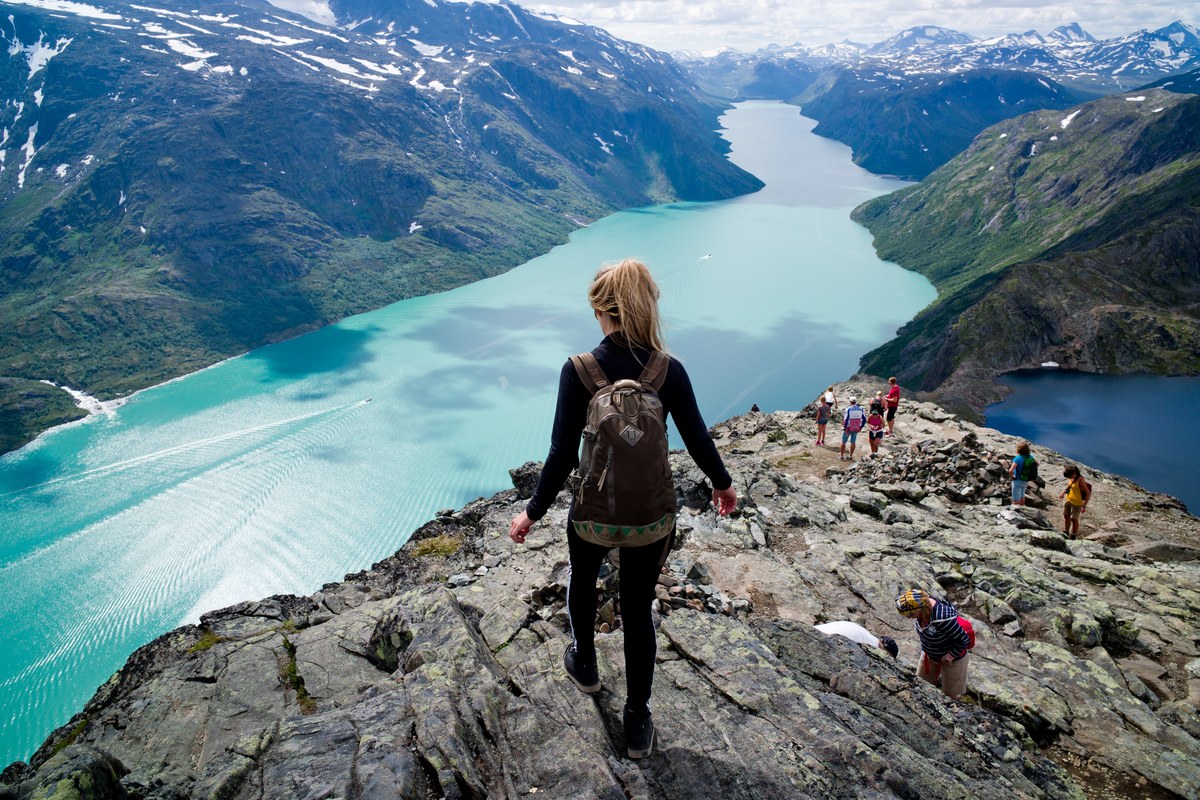
Some of the rules that shape everyday life in Norway are recent. Since 1 October 2024, section 2-1 of finansavtaleloven (the Financial Contracts Act) has given you an explicit right to pay with cash in shops. DSB (the Norwegian Directorate for Civil Protection) asks every household to be ready to manage on its own for at least one week in a crisis. And the right to roam, allemannsretten, comes with clear limits on where you can camp and when you can light a fire.
What does the right to roam allow in Norway?
Friluftsloven (the Outdoor Recreation Act) sets the camping rules. On utmark (uncultivated land) you may camp for up to two days at a time without the landowner's consent. In high mountains or areas far from settlement, longer stays need no consent unless they are likely to cause damage or nuisance. A tent must not be so close to an inhabited house or cabin that it disturbs the people living there, and never closer than 150 metres without their consent.
Fire is the other rule to know. Under section 3 of the Fire Prevention Regulation, you may not light a fire in or near forest and other uncultivated land from 15 April to 15 September, unless the municipality has given permission, a local regulation allows it, or it is obvious that no fire can start. Outside that period the municipality can impose an extra ban of up to 60 days when the fire danger is especially high.
| Rule | What applies | Legal basis |
|---|---|---|
| Camping on uncultivated land | Up to 2 days at a time without consent; longer in high mountains or far from settlement | Outdoor Recreation Act, section 9 |
| Distance from homes and cabins | At least 150 metres from an inhabited house or cabin, unless the occupants agree | Outdoor Recreation Act, section 9 |
| Fires in or near forest and uncultivated land | Banned 15 April–15 September, with exceptions | Fire Prevention Regulation, section 3 |
| Extra local fire ban | Up to 60 days when the danger is especially high | Fire Prevention Regulation, section 3 |
Source: the Outdoor Recreation Act and the Fire Prevention Regulation, read 23 September 2026.
Public holidays in Norway – and when the shops close
Under the Holidays Act, Norway's helligdager (public holidays) are ordinary Sundays plus the days below. 1 May and 17 May form a separate category, høgtidsdager (official celebration days): legally they count as Sundays, except for the rules on church ceremonies and helligdagsfred (holiday peace).
| Day | When | Type |
|---|---|---|
| New Year's Day | 1 January | Public holiday |
| Maundy Thursday, Good Friday, Easter Sunday, Easter Monday | Moves with Easter | Public holidays |
| 1 May | Fixed date | Official celebration day |
| 17 May | Fixed date | Official celebration day |
| Ascension Day | Moves with Easter | Public holiday |
| Whit Sunday and Whit Monday | Moves with Easter | Public holidays |
| Christmas Day | 25 December | Public holiday |
| Boxing Day | 26 December | Public holiday |
Source: the Holidays Act and the Act on 1 and 17 May as official celebration days, read 23 September 2026.
Shops that sell to consumers must stay closed on public holidays and close at 16:00 on Christmas Eve, Easter Eve and Whitsun Eve. Small kiosks and petrol stations below set floor-area limits are exempt, and shops may open 14:00–20:00 on the last three Sundays before Christmas Eve. Plan the Easter shopping early.
If you work, the Working Environment Act's rules on Sunday work also cover public holidays, according to Arbeidstilsynet (the Norwegian Labour Inspection Authority). On 1 and 17 May your employer must pay full wages if you are off, provided you have been employed for the preceding 30 days. If you have to work, you get the supplement your agreement gives for Sundays, or, without one, at least 50 per cent on top of your normal pay.
Can you still pay with cash in Norway?
Yes. Since 1 October 2024, a shop that regularly sells goods or services to consumers from fixed premises must let you pay with cash if it accepts other ways of paying. The right came with a 2024 amendment to the Financial Contracts Act, and it has exceptions:
| Where you pay | Right to pay with cash? |
|---|---|
| Staffed shop that accepts other payment methods | Yes |
| Vending machine | No |
| Unmanned shop | No |
| Premises with restricted access | No |
| Any amount above NOK 20,000 | No |
Source: the Financial Contracts Act, section 2-1, read 23 September 2026.
Cash also has practical uses. The police passport and ID offices take cash as well as cards, Apple Pay and Google Pay, but not Vipps. And DSB's preparedness checklist includes cash in case electronic payment systems fail.
Alcohol rules in Norway: age limits and opening hours
Section 1-5 of alkoholloven (the Alcohol Act) sets two age limits for buying or being served: 18 for drinks under 22 per cent alcohol, such as most beer and wine, and 20 for drinks of 22 per cent or more. The same limits apply to the staff who sell or serve, with limited exceptions for trainees and apprentices, according to Helsedirektoratet (the Norwegian Directorate of Health).
AS Vinmonopolet is Norway's state-owned alcohol retail monopoly, while grocery shops may sell beer of up to 4.7 per cent. Both have hours set by law, and Vinmonopolet is also closed on Christmas Eve.
| When | Vinmonopolet | Beer in grocery shops |
|---|---|---|
| Ordinary weekdays | 08:30–18:00 | 08:00–18:00; the municipality may extend to 20:00 at the latest |
| Day before a Sunday or public holiday | 10:00–16:00 (normal hours the day before Ascension Day) | Until 15:00; the municipality may extend to 18:00 at the latest |
| Sundays, public holidays, 1 and 17 May | Closed | No sales |
Source: the Alcohol Act, sections 3-4 and 3-7, read 23 September 2026.
Emergency numbers in Norway
Save these in your phone today. Calling 112 is free of charge, according to Politiet (the Norwegian Police).
| Number | When to call |
|---|---|
| 112 | Police emergency |
| 113 | Medical emergency – accident, serious illness or other danger to life |
| 110 | Fire and rescue, answered by the regional 110 centres |
| 116 117 | Legevakt (out-of-hours medical service), when your GP is closed and it cannot wait – open 24 hours |
| 116 111 | Emergency hotline for children and young people |
| 02800 | Police, non-emergency (+47 02800 from abroad) |
Source: Politiet, Helsenorge and DSB, read 23 September 2026.
How prepared should your household be in Norway?
DSB recommends that every household can cope on its own for at least one week in a crisis, when power, payments or the mobile network may fail. Its checklist:
| Need | What DSB recommends |
|---|---|
| Water | Clean drinking water stored in containers or bottles |
| Food | Food that keeps at room temperature |
| Cooking | A grill, camping stove or other way to cook without electricity |
| Warmth | Warm clothes, blankets, duvets and sleeping bags; firewood if you have a stove or fireplace; a gas or paraffin heater for indoor use |
| Light and news | Torches or headlamps and a DAB radio running on batteries, a crank or solar cells; matches and candles |
| Health | Medicines and first-aid supplies; iodine tablets for children, adults under 40 and pregnant or breastfeeding women |
| Money and contacts | Cash and payment cards; a written list of important contacts in case the mobile network is down |
Source: DSB, read 23 September 2026.
What to do now
| Step | What | When |
|---|---|---|
| 1 | Save 112, 113, 110 and 116 117 in your phone | Today |
| 2 | Write your important contacts on paper | This week |
| 3 | Build a one-week household supply from DSB's checklist | Over your first month |
| 4 | Keep some cash at home | Now |
| 5 | Check the fire rules before lighting a fire outdoors | Especially 15 April–15 September |
| 6 | Shop ahead of Easter, Whitsun and Christmas | Before 16:00 on the eve |
| 7 | Note Vinmonopolet's hours and the beer sales times | Before your first weekend or holiday |
Source: DSB, Politiet, Helsenorge and the Holidays Act, read 23 September 2026.
Official sources
The official pages this guide is based on, read 23 September 2026. Links open the authority’s own website.
- Arbeidstilsynet (Norwegian Labour Inspection Authority) · arbeidstilsynet.no
- DSB (Norwegian Directorate for Civil Protection and Emergency Planning) · dsb.no
- DSB (Norwegian Directorate for Civil Protection and Emergency Planning) · dsb.no
- DSB (Norwegian Directorate for Civil Protection and Emergency Planning) · dsb.no
- Politiet (Norwegian Police) · politiet.no
- Helsedirektoratet (Norwegian Directorate of Health) · helsedirektoratet.no
- Helsedirektoratet (Norwegian Directorate of Health) · helsedirektoratet.no
- Helsedirektoratet (Norwegian Directorate of Health) · helsedirektoratet.no
- Helsedirektoratet (Norwegian Directorate of Health) · helsedirektoratet.no
Relocate in Europe provides general information, not legal or financial advice for your individual situation. Check with the authority named above before you act – rules change, and your case may differ.