Fødselsnummer or D-number – how Norway's National Population Register gives you an ID
Last updated 25 September 2026Rules checked every MondayOfficial sourcesSources & methodology →
Your bank, your employer and the tax office all ask for the same thing: a Norwegian identification number. Whether you get a fødselsnummer or a D-number depends on how long you stay, and it decides which services you can use. Here is how the register, the ID check and the waiting times work.
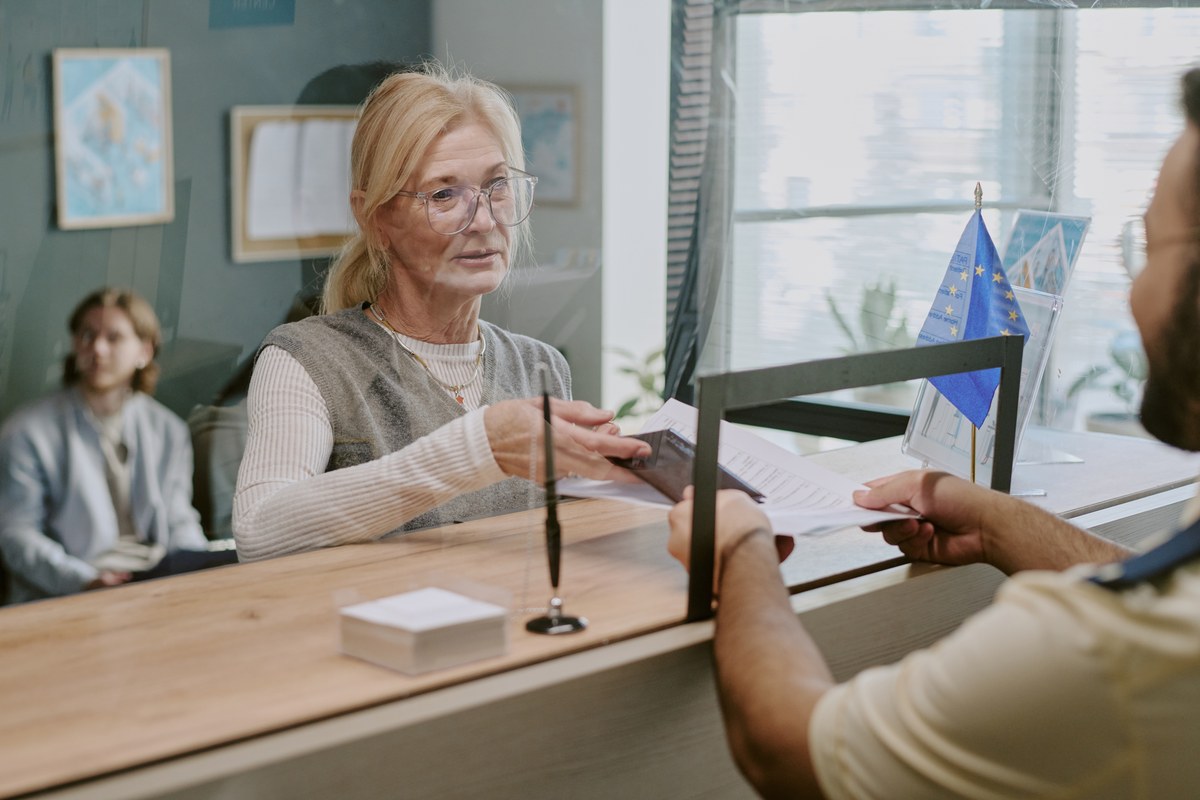
Your fødselsnummer (national identity number) is the number Norway runs on, and folkeregisteret (the National Population Register), kept by Skatteetaten (the Norwegian Tax Administration), decides whether you get one. The 2026 news shows why the type of number matters. From 1 September 2026, citizens of countries outside the EU/EEA/EFTA with a fødselsnummer can get a Norwegian national ID card – at first only at the police service centre in Ski, with more offices by the end of the year. For EU/EEA/EFTA citizens, who can already apply in every police district, Politiet (the Norwegian Police) spells it out: with only a D-number, you cannot apply.
The register's data is used by NAV (the Norwegian Labour and Welfare Administration), UDI (the Norwegian Directorate of Immigration), Lånekassen (the State Educational Loan Fund), the Public Roads Administration, Statistics Norway, banks, insurers and employers. Note that being registered as resident there is not the same as being tax resident in Norway.
Fødselsnummer or D-number: which will I get in Norway?
The dividing line is six months. If you will live in Norway for at least six months, or more permanently, you are issued a fødselsnummer once your move is approved. If you do not meet the conditions, you may get a D-number instead – for example if you work here for a few months, are an asylum seeker or sit on the board of a Norwegian company. Only foreign citizens get D-numbers, and you cannot apply for either number yourself.
| Fødselsnummer | D-number | |
|---|---|---|
| Who gets it | People whose move to Norway is approved, and children born in Norway | Foreign citizens who do not meet the conditions for a fødselsnummer |
| Typical stay | At least six months | Shorter stays, such as a few months of work |
| How you get it | Report your move and pass the ID check – or through your residence permit | Requested for you by an authority or company, such as Skatteetaten when you apply for a tax deduction card |
| Format | 11 digits, starting with your date of birth | 11 digits; 4 is added to the first digit of your birth day |
| Validity | For life | Set to inactive after five years; can be reactivated |
| Right to a fastlege (GP) | Yes, once registered as resident | Normally no, with exceptions such as asylum seekers |
| National ID card | You can apply | You cannot apply |
| Services | All services in Norway | A majority of services, including an electronic ID |
Source: Skatteetaten, Helsenorge and Politiet, read 23 September 2026.
How do I get a fødselsnummer when moving to Norway?
You must report a move to Norway if you intend to stay at least six months in a row, or more permanently – and also if you move back after being registered as emigrated. You then go through an ID check and show documents proving you will live in Norway for at least six months. Where you start depends on who you are:
| Your situation | What you do | What follows |
|---|---|---|
| EU/EEA citizen staying six months or more | Book an appointment with Skatteetaten; with an electronic ID, send the notification online and upload documents first | A fødselsnummer, if the move is approved |
| Nordic citizen staying more than six months | According to UDI, visit a tax office for ID verification and report the move no later than eight days after arrival | A fødselsnummer |
| From outside the EU/EEA, with a residence permit | Usually nothing: UDI notifies Skatteetaten, which assesses whether to register you | A letter once the case is processed |
| Student from outside the EU/EEA | Hold a study permit for more than nine months | Registration as resident, with a fødselsnummer |
| Staying less than six months and not working | Skatteetaten will not order a number for you | Another company or public agency must request one |
| Norwegian citizen returning after emigrating | Report the move to Norway | Your fødselsnummer stays the same for life |
Source: Skatteetaten, IMDi and UDI, read 23 September 2026.
According to Skatteetaten, a notification of a move to Norway takes 2 to 25 weeks. The spread comes down to paperwork: if you have supplied everything, the case can move quickly; if the office has to ask for more information and documents, it takes longer.
How does the ID check at the tax office work?
Skatteetaten carries out ID checks at 42 selected tax offices, and you must book an appointment first – there is no walk-in service. Bring the right original document:
| You are | Bring |
|---|---|
| A Nordic citizen | Passport or national ID card – or, if moving from another Nordic country, a valid driving licence plus a dated printout from that country's population register, no older than three months |
| An EU/EEA/EFTA citizen | Passport or national ID card |
| From outside the EU/EEA/EFTA | Passport |
| An asylum seeker, a refugee or unable to get a passport from home | For example a Norwegian residence card, a refugee travel document, or an asylum seeker certificate with a UDI printout of your status |
Source: Skatteetaten, read 23 September 2026.
Afterwards, your identity is marked in the register as 'Checked' or 'Not checked'. Public and private organisations that use the register can see that status, and it can be decisive for your access to a number of rights – so the visit is worth doing properly.
How do I get a D-number in Norway?
You cannot apply for one. An authority or company requests it for you – among them Skatteetaten, NAV, banks and insurers, the Brønnøysund Register Centre, Helfo, UDI, the police and the Ministry of Foreign Affairs. If you come to work, it happens through the tax card: with no fødselsnummer, Skatteetaten issues a D-number when you apply for your skattekort (tax deduction card).
Usually you post a certified copy of your passport or national ID card. It must be in colour, show both sides, be no older than three months and be certified – signed, stamped and dated – by, for example, a notary, a tax office, the police, NAV, or a Norwegian municipality, lawyer or bank. The company requesting the number may also require you to attend an ID check, which you book with Skatteetaten.
A D-number looks like a fødselsnummer, except that 4 is added to the first digit of your birth day. If Anna was born on 1 January 1985, her D-number starts 410185. Five years after it is assigned, it is set to inactive. It is not deleted and still works for many things, but it must be reactivated before you can get a new tax deduction card.
What does my number say – and how do I keep my record right?
Both numbers have 11 digits. In a fødselsnummer, the first six show your date of birth, the next three are an individual number – the third of them odd for men and even for women – and the last two are check digits.
Keep your address current, because Skatteetaten sends important information to the address in the register. If you move within Norway, notify Skatteetaten within eight days; automatically approved moves go through immediately, while manual cases can take up to nine weeks. If you have a fødselsnummer and will live abroad for more than six months, report that too; with a D-number, register your overseas address instead. D-number holders can log in to check their registered details and report errors. If you need a confidential address, the police or child welfare services decide whether you qualify.
What to do now
| Step | What | When |
|---|---|---|
| 1 | Work out whether you will stay six months or more | Before you move |
| 2 | Book the tax office appointment and gather original ID and proof of your stay | As soon as you know your arrival date |
| 3 | Attend the ID check at one of the 42 tax offices | At your booked appointment |
| 4 | Apply for a skattekort – you get a D-number automatically if needed | Before you start work |
| 5 | Report any later move within Norway | Within eight days |
| 6 | Questions: Skatteetaten on 800 80 000 (free) or +47 22 07 70 00 from abroad | Weekdays 09:00–15:00 |
Source: Skatteetaten, read 23 September 2026.
Official sources
The official pages this guide is based on, read 23 September 2026. Links open the authority’s own website.
- Skatteetaten – National identity numbers · skatteetaten.no
- Skatteetaten – D number · skatteetaten.no
- Skatteetaten – ID checks · skatteetaten.no
- Skatteetaten – Case processing time · skatteetaten.no
- IMDi – New in Norway, Settlement in Norway and Norwegian identity numbers · nyinorge.no
- Skatteetaten – Moving (hub page) · skatteetaten.no
- Skatteetaten – Move to Norway · skatteetaten.no
- IMDi – New in Norway, Checklist for Labour Immigrants; Skatteetaten, National identity numbers/D number · nyinorge.no
Relocate in Europe provides general information, not legal or financial advice for your individual situation. Check with the authority named above before you act – rules change, and your case may differ.