Moving to Monaco – the first 30 days in the right order, from the eight-day rule to the bank
Last updated 25 September 2026Rules checked every MondayOfficial sourcesSources & methodology →
Moving to Monaco starts with a lease, a folder of certificates and a Principality that expects you at the police residents' section within eight days of arrival. Housing comes before the residence card, and the card's receipt before the bank – here is the order that works, step by step.
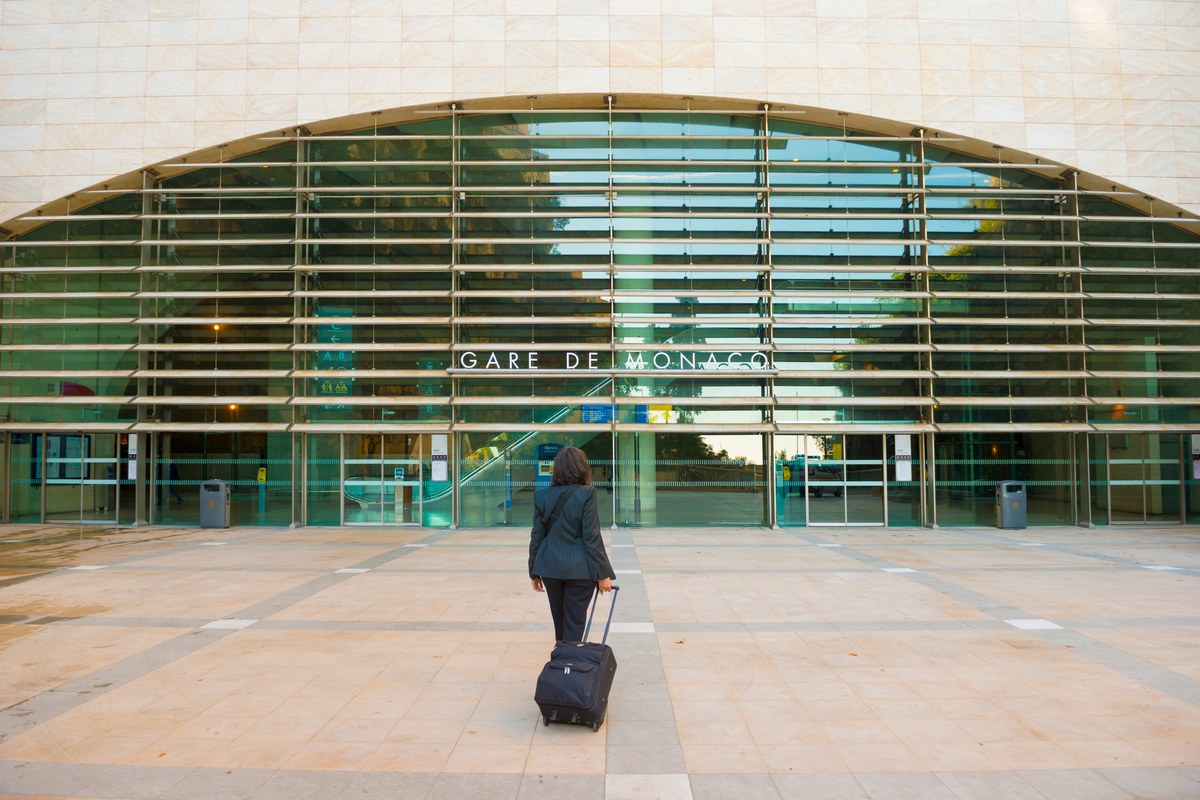
If you are moving to Monaco in autumn 2026, note three recent changes: residents with a valid residence card are exempt from the EU's Entry/Exit System, in force since 12 October 2025 and at every border post since 10 April 2026; hiring, work permit included, has been fully digital since March 2026; and the residence certificate has been available online since 18 December 2025.
Monaco is a city-state of about two square kilometres with 38,857 residents on 31 December 2025, according to IMSEE. It is not an EU member and not a Schengen member: you enter through France, and French rules govern your visa. Everything else hangs on the carte de séjour (residence card) issued by the Sûreté Publique – Section des Résidents (the police residents' section).
Before you travel: the visa question and the eight-day rule
Step zero depends on your passport. As a citizen of an EU or EEA state or Switzerland you need only a valid identity card or passport; a French citizen settles freely under the 1963 Neighbourhood Convention. Everyone else – UK citizens included since 1 January 2021 – must first obtain a long-stay establishment visa (type D) for Monaco from the French consulate nearest your last home; minor children need it too. Part 2 has the routes.
Then the deadline that surprises newcomers. Under Sovereign Ordinance 3.153 of 19 March 1964, any foreigner over 16 must apply for the residence card within eight days of arrival, and may stay only with a valid récépissé provisoire (provisional receipt) meanwhile. No official processing time is published.
Moving to Monaco – the first 30 days as a checklist
Housing comes first because the card application requires proof of a home; the card comes before the bank because the bank accepts its provisional receipt.
| Step | What | Where |
|---|---|---|
| 1 | Visa (non-EEA citizens, UK included), before you leave | French consulate nearest your last home |
| 2 | A home: lease, title deed or hosting certificate | Estate agents; the Direction des Services Fiscaux (tax office) for the lease |
| 3 | Electricity and gas; water | SMEG; SMEaux |
| 4 | Residence-card application, within eight days | Section des Résidents |
| 5 | Bank account, with the provisional receipt | A bank in Monaco |
| 6 | Work permit and social security registration | Your employer, via the Service de l'Emploi |
| 7 | Interview, then enrolment and handover; pay €80 | Section des Résidents |
| 8 | Phone and internet; school | Monaco Telecom; the education department (DENJS) |
| 9 | Driving-licence exchange, within one year | Service des Titres de Circulation |
Source: MonServicePublic, Legimonaco and the Direction du Travail, read 24 September 2026.
Week one: a home, the meters and the lease duty
Every applicant hands in the electricity contract or latest bill, plus a notarised title deed if you own, a registered lease if you rent, or a certificat d'hébergement à titre gratuit (free-hosting certificate) if a close relative, spouse or partner puts you up. Register the lease with the tax office within three months of signing; the tenant pays the droit de bail (lease duty), 1 per cent of rent and charges for the whole lease period. Part 5 covers housing.
For electricity and gas, go to SMEG with an identity document, a bank details slip (RIB) and proof of address, such as a copy of the lease; apply before you move in, and take a contract in your own name even if the power is on. SMEaux connects the water within 24 hours of the appointment. Monaco Telecom wants the same documents plus the five-character code on the square logo usually above your front door.
Week two: the residence card and the provisional receipt
The first card is the carte de séjour temporaire (temporary residence card): valid one year, €80, issued without any prior residence. You file online with scanned documents; if the file is admissible you book an interview and bring the originals. After an inquiry comes a second appointment for enrolment and handover, when you pay. On paper, form 322-0024 goes to the Section des Résidents, 9 rue Suffren-Reymond. The Maison du numérique helps with online forms by appointment on (+377) 92 26 92 26.
| Document | Detail |
|---|---|
| Passport | Valid, with the establishment visa for non-EEA citizens |
| Birth certificate | Under three months old |
| Criminal record extract | Under three months old, from every country of residence in the last five years |
| Sworn statement | The official form, signed |
| Proof of housing | Electricity contract or bill, plus title deed, registered lease or hosting certificate |
| Family papers | Marriage certificate; each child's passport or identity card |
| Translations | Sworn translation of anything not in French, English or Italian |
Source: MonServicePublic, read 24 September 2026.
Proof of resources differs by situation. Employees bring a Service de l'Emploi document authorising work – a promise of employment, the hiring-authorisation application, or the work permit with the latest payslip. Retirees bring a pension statement; someone supported by a relative, spouse or partner brings a support letter and proof of that person's means. Everyone else needs a certificate from a Monaco bank, less than a month old; the bank, not the Government, sets the sufficient amount. Health insurance is not on the list, and a private policy is not a listed requirement.
Weeks two to three: bank account, work permit and your number
Monaco gives you a legal right to a bank account. Under Law 1.492 of 8 July 2020, people in the process of settling can open a deposit account; you show the provisional receipt, photo identification, proof of address under three months old and a sworn statement that you hold no other account in Monaco. The bank has 15 working days from receiving everything to open the account or hand you a refusal certificate, after which you can turn to the Direction du Budget et du Trésor. A bill tabled on 13 March 2026 would stretch that to 45 working days – a bill only.
Your job comes with its own permit. No foreign national may hold a private-sector job in Monaco without a permis de travail (work permit) – French and EU citizens included – and the employer must hold the hiring authorisation before you start; since Law 1.583 of 2 December 2025 a contract is valid only once the permit exists. The same request registers you with the CCSS (health and family) and the CAR (pensions); Monaco has no separate personal ID number, and that registration number, the matricule, plus the residence card identify you. Part 3 explains the number, part 6 the permit.
Health, school and the driving licence
As an employee you are covered by the Caisse de Compensation des Services Sociaux (CCSS) for sickness, maternity, invalidity and death, and so are a spouse and dependent children without cover of their own who live in Monaco or France. Self-employed people join the CAMTI. In an emergency call 17 for the police, 18 or 112 for the fire brigade, and 116 117 for the out-of-hours doctor. Part 8 covers people who do not work.
Schooling is compulsory from 6 to 16, and from age 3 your child may attend nursery school subject to places. Families arriving outside the enrolment periods use a dedicated procedure; the receipt of your card application is accepted provisionally.
Then note the calendar: under Sovereign Ordinance 11.966 of 18 June 2026, anyone living in Monaco at least 185 days a year must exchange a foreign driving licence within one year of the 186th day after arrival. Part 12 has the details.
What to do now
| Step | What | When |
|---|---|---|
| 1 | Check whether you need the French establishment visa (part 2) | Before you book the move |
| 2 | Sign and register the lease; open electricity, gas and water | Before you apply for the card |
| 3 | File the residence-card application and keep the receipt | Within eight days of arrival |
| 4 | Open a bank account with the receipt | As soon as you have it |
| 5 | Check that your employer has the hiring authorisation | Before you start work |
| 6 | Interview, then enrolment; pay €80 | When invited |
| 7 | Report any change of address or job | Within eight days |
| 8 | Exchange your driving licence | Within a year of the 186th day |
Source: MonServicePublic and Legimonaco, read 24 September 2026.
Official sources
The official pages this guide is based on, read 24 September 2026. Links open the authority’s own website.
- MonServicePublic (Gouvernement Princier) – Évènement de vie « Je m'installe à Monaco » · monservicepublic.gouv.mc
- Legimonaco – Ordonnance Souveraine n° 3.153 du 19 mars 1964 relative aux conditions d'entrée et de séjour des… · legimonaco.mc
- MonServicePublic (Gouvernement Princier) – Demander une carte de séjour · monservicepublic.gouv.mc
- MonServicePublic (Gouvernement Princier) – Acquitter le droit de bail · monservicepublic.gouv.mc
- MonServicePublic (Gouvernement Princier) – Ouvrir un compte bancaire · monservicepublic.gouv.mc
- Legimonaco – Loi n° 629 du 17 juillet 1957 tendant à réglementer les conditions d'embauchage et de licenciement en… · legimonaco.mc
- MonEntreprise (Gouvernement Princier) – Recruter du personnel · monentreprise.gouv.mc
- Gouvernement Princier (gouv.mc) – Communiqué « Emploi : de nouvelles fonctionnalités sur le parcours d'embauche en… · gouv.mc
- Caisses Sociales de Monaco – Employeur à titre professionnel : Immatriculation des salariés · caisses-sociales.mc
- MonServicePublic (Gouvernement Princier) – Caisses d'assurance maladie de Monaco (régime général) · monservicepublic.gouv.mc
- Caisses Sociales de Monaco – « Ma Carte d'immatriculation Assuré devient digitale », 3 février 2025 · caisses-sociales.mc
- MonServicePublic (Gouvernement Princier) – Les numéros d'urgence · monservicepublic.gouv.mc
- Mairie de Monaco – Réservation d'emplacement(s) pour un déménagement · mairie.mc
- MonServicePublic (Gouvernement Princier) – Réunions d'informations pour les futurs et nouveaux résidents · monservicepublic.gouv.mc
Relocate in Europe provides general information, not legal or financial advice for your individual situation. Check with the authority named above before you act – rules change, and your case may differ.