Public holidays in Germany by Land – plus Sunday rules, cash and the emergency numbers
Last updated 25 September 2026Rules checked every MondayOfficial sourcesSources & methodology →
Which days is everything shut, can you still pay cash everywhere, and whom do you call in an emergency? In Germany some answers depend on your Land. Here are the public holidays for 2026, the Sunday rules, how people pay and the numbers to save today.
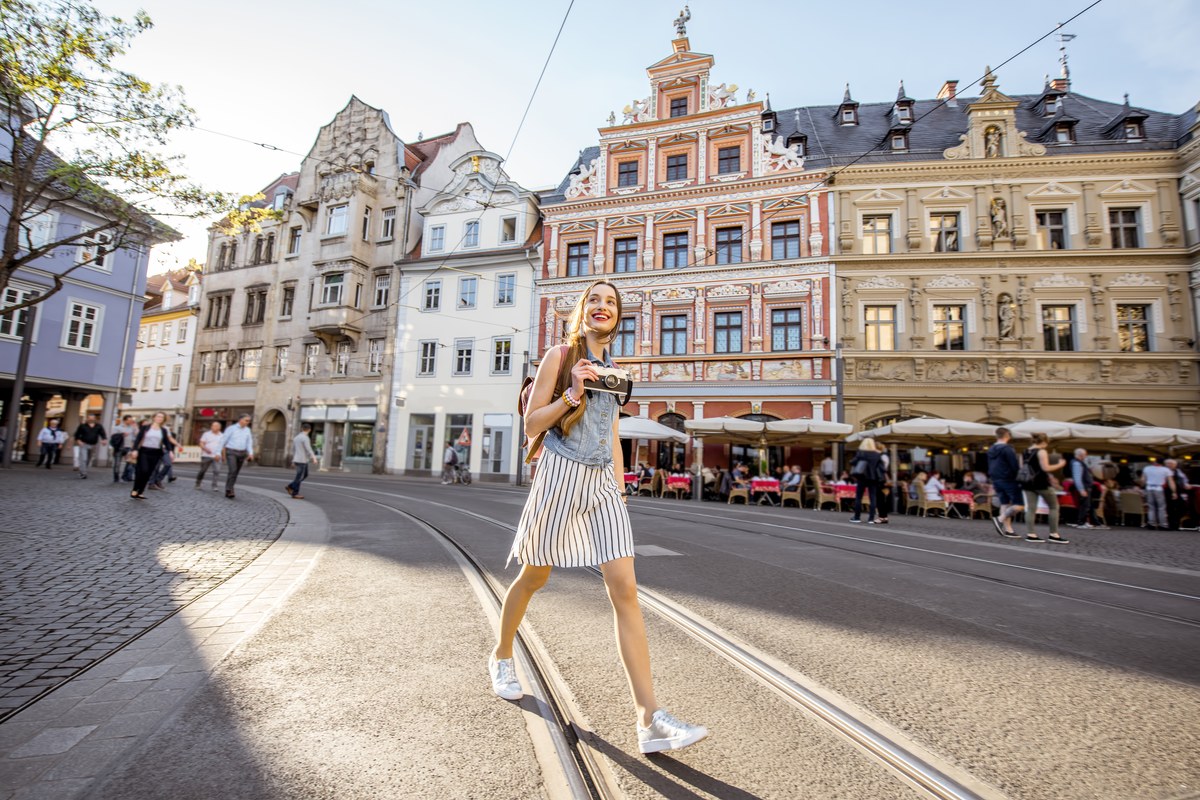
Everyday life in Germany runs on a few rules worth knowing before your first long weekend: which public holidays apply where you live, why shops close on Sundays, and when cash still matters. One habit is shifting. In 2025, for the first time, most everyday purchases in Germany were paid without cash, according to the Deutsche Bundesbank (Germany's central bank) – yet cash is still the single most-used way to pay.
Which public holidays does Germany have in 2026?
Public holidays are set by the Länder (federal states). The only holiday set by federal law is the Day of German Unity on 3 October. Nine holidays, however, are protected in every Land by its Sunday and holiday laws.
| Holiday | Date in 2026 |
|---|---|
| New Year's Day (Neujahr) | Thursday 1 January |
| Good Friday (Karfreitag) | Friday 3 April |
| Easter Monday (Ostermontag) | Monday 6 April |
| Labour Day | Friday 1 May |
| Ascension Day (Christi Himmelfahrt) | Thursday 14 May |
| Whit Monday (Pfingstmontag) | Monday 25 May |
| Day of German Unity | Saturday 3 October |
| Christmas Day | Friday 25 December |
| Boxing Day | Saturday 26 December |
Source: the Federal Ministry of the Interior and the Berlin city portal, read 23 September 2026.
Which extra holidays depend on your Land?
Beyond the nine, the Länder can add their own, so an office in Munich may be closed on a day when its Berlin branch works normally. Two examples show how much it varies:
| Where | Extra public holidays |
|---|---|
| Berlin | International Women's Day, 8 March (a Sunday in 2026) |
| Bavaria, statewide | Epiphany (6 January), Corpus Christi (Fronleichnam) and All Saints' Day (1 November) |
| Bavaria, municipalities with a predominantly Catholic population | Also Assumption Day (15 August) |
| Augsburg (Bavaria) only | Also the Peace Festival (8 August) |
Source: the Berlin city portal and the Bavarian State Ministry of the Interior, read 23 September 2026.
If you live in one Land and work in another, check both calendars before you book leave.
What is open on Sundays in Germany?
Sunday is a day of rest by law. Employees may in principle not be employed on Sundays and public holidays at all; work is allowed only under statutory exceptions. Shops follow the same logic. The federal Shop Closing Act (Ladenschlussgesetz) keeps shops closed on Sundays and public holidays, and Berlin shows how differently a Land can set its own rules.
| Rule | Federal Shop Closing Act | Berlin |
|---|---|---|
| Monday to Saturday | Closed before 6:00 and after 20:00 | Practically no statutory limits |
| Sundays and public holidays | Closed | Closed, except on 8 fixed Sundays a year (two in Advent) plus two Sundays or holidays for special occasions, 13:00–20:00 |
| 24 December, if a working day | Closed before 6:00 and from 14:00 | Open only until 14:00 |
| Exceptions | Bakeries may open at 5:30 | Shops in the main long-distance and large regional railway stations open regularly on Sundays and holidays |
Source: the Shop Closing Act and the Berlin city portal, read 23 September 2026.
In practice, according to the federal portal Make it in Germany, large supermarkets are usually open at least from 7:00 to 20:00, smaller shops often close on Saturday afternoons, and most shops are closed on Sundays and public holidays. Do your big shop on Saturday.
Bavaria adds quiet on top. Its Feiertagsgesetz (holiday act) prohibits publicly noticeable work that disturbs the rest of Sundays and public holidays. On stille Tage (silent days) – among them Ash Wednesday, Maundy Thursday, Good Friday, Holy Saturday, All Saints' Day, Remembrance Sunday, Totensonntag, the Day of Prayer and Repentance and Christmas Eve – public entertainment events are banned. On Good Friday any music performance in venues serving alcohol is prohibited.
Age limits at the till
The Youth Protection Act applies nationwide. Beer, wine and sparkling wine may not be sold to under-16s, nor drunk by them in public; spirits and drinks containing spirits, including alcopops, not to under-18s. Young people aged 14 and 15 may drink beer or wine in public only with a parent or guardian. Tobacco, e-cigarettes – even nicotine-free ones – and other nicotine products may not be sold to anyone under 18, including from vending machines and by mail order.
Cash or card: how do people pay in Germany?
Euro banknotes are the only unlimited legal tender in Germany. A shop may refuse cash only if that was agreed before the purchase, for example by a clearly visible notice at the checkout; otherwise you can pay in cash. Nobody except the issuing authority has to accept more than 50 coins in a single payment.
The Bundesbank's study of how people paid in 2025, published in June 2026, shows the shift. Cashless payments made up 55 per cent of purchases, the first time a majority. Cash still led as a single method at 45 per cent of payments, six points less than in 2023, followed by debit card at 26 per cent and mobile payment at 10 per cent. Cash could be used in 94 per cent of in-store purchases and cashless payment in 86 per cent – but cash is accepted less often on local public transport and at self-service checkouts. In Berlin, smaller shops and bars often take only cash, so carry some.
Tipping is voluntary. The Berlin city portal gives these customary amounts and advises giving the tip in cash if you pay by card:
| Where | Customary tip |
|---|---|
| Restaurant or café | 5–10 per cent of the bill |
| Taxi | About 10 per cent |
| Hairdresser | 10–15 per cent |
| Cloakroom | €0.50–2 |
| Hotel porter | About €2 per bag |
Source: the Berlin city portal, read 23 September 2026.
Which emergency numbers should you save in Germany?
Save these before you need them. 112 reaches the fire brigade and ambulance service free of charge throughout Germany and Europe, also from a mobile phone with a SIM card. When you call, say where the emergency is, what happened and who is calling – then wait for questions. For medical problems that are not life-threatening, call 116 117, so that 112 stays free for real emergencies.
| Number | What for | Good to know |
|---|---|---|
| 112 | Fire brigade and ambulance | Free, nationwide and across Europe |
| 110 | Police | Also reachable by emergency fax |
| 116 117 | Medical on-call service when surgeries are closed | 24 hours a day, free with a German phone contract; not for dentists or life-threatening cases |
| 116 116 | Blocking lost or stolen bank cards | Free central number; it also blocks the online-ID function of a lost ID card or residence permit |
| 115 | Questions on public services: responsibilities, fees, documents | Berlin, 14 other Länder and the federal administration take part; Berlin answers Monday to Friday 8:00–18:00 |
| (030) 19 240 | Poison emergency line | Berlin only |
| Fax to 110 or 112, or the nora app | Emergency calls for people with speech or hearing impairments | nora is the official emergency app |
Source: the Federal Office of Civil Protection and Disaster Assistance, the Berlin police and city portal, BAMF and the 116117 patient service, read 23 September 2026.
What to do now
| Step | What | When |
|---|---|---|
| 1 | Save 112, 110, 116 117 and 116 116 in your phone | Today |
| 2 | Add your Land's extra holidays to your calendar | This week |
| 3 | Plan your weekly shop around Sunday closing – in Berlin, note the station shops | Before your first Sunday |
| 4 | Keep some cash for small shops, bars and tips | Always |
| 5 | Check the silent-day rules before planning a party or event in Bavaria | Before you book |
Source: the Federal Office of Civil Protection and Disaster Assistance, the Berlin city portal and the Bavarian State Ministry of the Interior, read 23 September 2026.
Official sources
The official pages this guide is based on, read 23 September 2026. Links open the authority’s own website.
- Bundesministerium des Innern – Nationale Feiertage · bmi.bund.de
- berlin.de – Feiertage & Schulferien · berlin.de
- Bayerisches Staatsministerium des Innern – Feiertage · stmi.bayern.de
- Bundesamt für Bevölkerungsschutz und Katastrophenhilfe (BBK) – Erste Hilfe und Notruf · bbk.bund.de
- berlin.de – Polizei · berlin.de
- BBK – Europäischer Tag des Notrufs (Meldung 2026) · bbk.bund.de
- berlin.de – Notfall & Notapotheken · berlin.de
- berlin.de – Kreditkarten · berlin.de
- Gesetz über die Deutsche Bundesbank § 14 · gesetze-im-internet.de
- Deutsche Bundesbank – Häufig gestellte Fragen zum Bargeld · bundesbank.de
- Deutsche Bundesbank – Häufig gestellte Fragen zu Euro-Münzen · bundesbank.de
- Deutsche Bundesbank – Pressemitteilung Zahlungsverhalten in Deutschland 2025 (17.06.2026) · bundesbank.de
- Ladenschlussgesetz § 3 · gesetze-im-internet.de
- berlin.de – Ladenöffnungszeiten & Sonntagsverkauf · berlin.de
- Make it in Germany – Useful everyday knowledge · make-it-in-germany.com
- Jugendschutzgesetz § 9 · gesetze-im-internet.de
- Jugendschutzgesetz § 10 · gesetze-im-internet.de
- berlin.de – Trinkgeld · berlin.de
Relocate in Europe provides general information, not legal or financial advice for your individual situation. Check with the authority named above before you act – rules change, and your case may differ.