Driving licence exchange, NCT, tolls and the Leap card – how to get around Ireland in 2026
Last updated 25 September 2026Rules checked every MondayOfficial sourcesSources & methodology →
Whether you can keep driving on your current licence depends on where it was issued – and for many newcomers the answer changes after a year. This part covers the exchange rules, bringing a car, the NCT, tolls and parking in Dublin, and the Leap card that cuts the cost of every bus, tram and train.
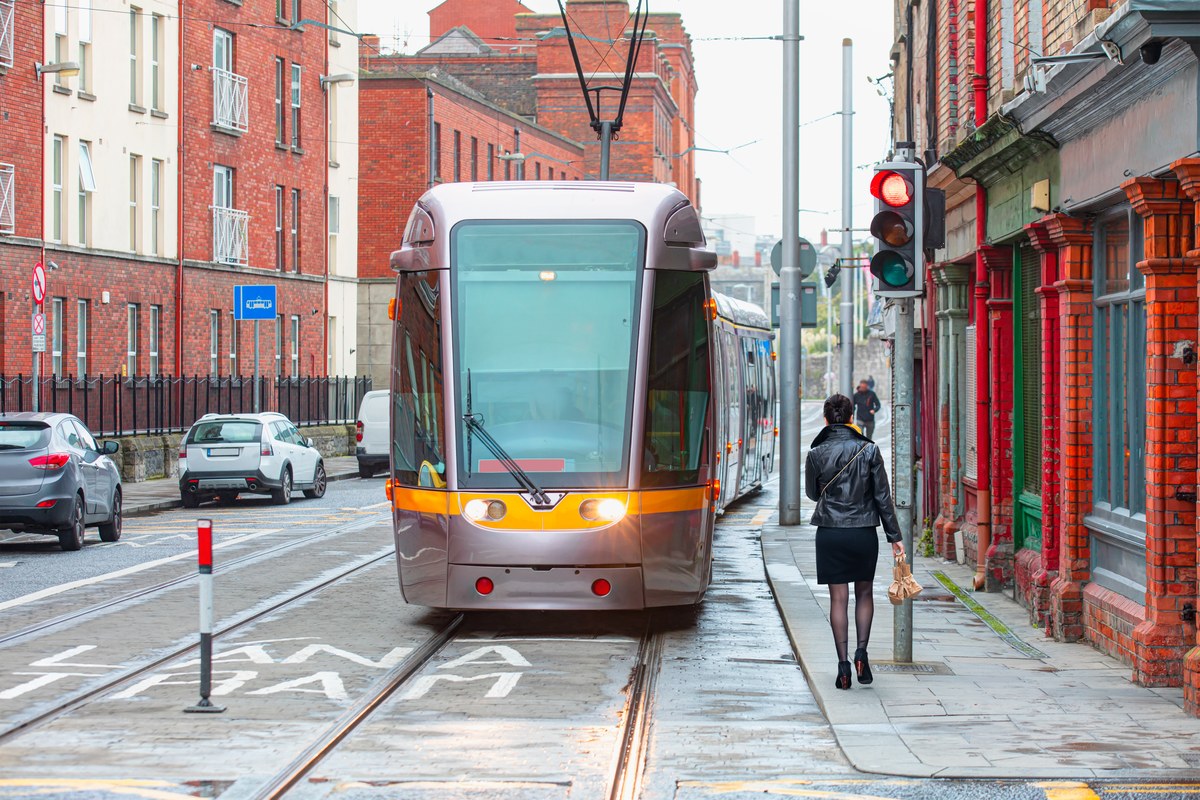
Rules moved recently: the default limit on rural local roads fell to 60 km/h on 7 February 2025, and from 1 November 2026 you must be at least 15 to sit the driver theory test. Whether you must exchange your driving licence, and how the Leap card works, are the questions newcomers ask first.
Can I drive on my current licence – and when must I exchange it?
A licence from an EU or EEA state is valid here for as long as it lasts; if you want to swap it for an Irish one, do so within 10 years of its expiry date. Licences from the 16 'recognised states' – the UK, Australia, Japan, South Africa and Switzerland among them – let you drive as a visitor for up to 1 year. Once you are normally resident, meaning at least 185 days in a calendar year, you should exchange it or start the Irish process. A UK licence holder living in Ireland can no longer drive on it and must exchange.
A licence from anywhere else – the United States or India, say – cannot be exchanged. You may drive as a visitor for up to 12 months with the licence and an international driving permit; after that you go through the full Irish process, though you need only 6 essential driver training (EDT) lessons instead of 12. Foreign learner permits are never valid here.
| Licence issued by | Drive on it? | Exchange? |
|---|---|---|
| An EU or EEA state | Yes, while it is valid | Optional, within 10 years of expiry |
| A recognised state | As a visitor, up to 1 year | Yes, once normally resident; within 1 year of expiry |
| The UK, if you live in Ireland | No | Yes, exchange it |
| Any other country | Up to 12 months with an international driving permit | No – theory test, learner permit, 6 EDT lessons, driving test |
| Ukraine, under temporary protection | Yes | No longer possible |
Source: Citizens Information, read 24 September 2026.
Exchanging costs €65, free from age 70. Apply online with a Public Services Card (PSC) and verified MyGovID, or by appointment at one of 34 NDLS (National Driver Licence Service) centres; NDLS customer care is on 0818 700 800. Non-EU and non-EEA citizens must prove normal residence, and you need a PPS number (Personal Public Service number) for theory tests and licences (part 3).
Learning to drive from scratch
The minimum age for a car is 17. Official sources give different learner permit fees, so check when you apply. After your first full licence you must display N-plates for 2 years, and in those 2 years – as for learners – 7 penalty points disqualify you instead of 12, and the drink-drive limit is 20 mg per 100 ml of blood.
| Step | Fee | Note |
|---|---|---|
| Driver theory test, car | €45 | From 1 November 2026 the minimum age is 15; the certificate lasts 2 years |
| Learner permit | Sources differ – check with the NDLS | Held 6 months before the test |
| Essential driver training | – | 12 lessons; 6 for holders of a full non-exchange licence |
| Driving test, category B | €85 | A new invitation about 10 weeks after a fail; appeal €25 at the District Court |
| Full licence | €65 for 10 years, €35 for 3 years | Free from 70; N-plates for 2 years |
Source: Citizens Information, read 24 September 2026.
Bringing a car or buying one here
A car you bring in must be registered within 30 days: book the National Car Testing Service (NCTS) appointment within 7 days of arrival and pay Vehicle Registration Tax (VRT) unless exempt. Transfer of Residence relief spares you VRT if you have moved your normal residence to Ireland, owned and used the car abroad for at least 6 months, bring it within 12 months of the move and it is fully tax-paid. Claim within 7 days of bringing the car in, through Revenue's MyEnquiries from within the EU or at the customs office of entry from outside it.
Otherwise VRT runs from 7 per cent of the open market selling price at 0–50 g CO2/km to 41 per cent above 190 g, plus a NOx charge. A used car from Great Britain also needs a customs declaration, customs duty and import VAT since Brexit.
| Running a car | Rule or cost |
|---|---|
| Motor tax | Compulsory; rates by CO2 for cars registered since July 2008; paid for 3, 6 or 12 months |
| NCT roadworthiness test | From age 4, then every 2 years to 10, yearly from 10 to 30; €60, re-test €40; an EU roadworthiness certificate stays valid until it expires; booking line 01 413 5992 |
| Insurance | Compulsory; uninsured driving means a fine of up to €5,000, 5 penalty points or disqualification |
| Speed limits | 120 km/h on motorways, 100 national, 80 regional, 60 rural local, 50 built-up; many urban limits fall to 30 by 31 March 2027; no learners on motorways |
Source: Citizens Information, read 24 September 2026.
Tolls and parking in Dublin
Tolls are charged per passage on specific roads only – the barrier-free M50 and the Dublin Port Tunnel in Dublin, several motorway and national-road plazas, the Limerick Tunnel and the N25 Waterford bypass – and one eToll tag works on all of them; non-payment can bring a fine of up to €5,000 and/or 6 months' imprisonment. The M50 costs a car €2.60 with a tag, €3.20 with a video account and €3.80 unregistered, and takes no cash: unregistered drivers must pay by 8pm the next day through eFlow, on 0818 50 10 50 or at a Payzone outlet, or late charges follow. The Port Tunnel is €14.00 southbound from 6am to 10am and €12.00 northbound from 4pm to 7pm on weekdays, otherwise €3.50, according to Transport Infrastructure Ireland.
Dublin City Council's pay-and-display zones cost €4.00 an hour (yellow), €3.50 (red), €2.00 (green), €1.20 (orange) and €0.90 (blue), free on public holidays; a clamp costs €125 to release, a tow €250 plus €35 a day.
What is the Leap card and what does it cost?
The TFI (Transport for Ireland) Leap Card is a reusable prepaid card valid on Dublin Bus, Go-Ahead Ireland, Luas, DART and commuter rail, Bus Éireann and Local Link; it saves up to 30 per cent on cash fares, 50 per cent with a Young Adult or Student card. An adult card costs a €5 deposit plus a €5 top-up, a child card (5–15) a €3 deposit, from 2,500 agents or any post office. Register it – an unregistered card cannot be replaced or refunded.
In Dublin's Zone 1 the TFI 90-Minute Fare of €2.00 buys unlimited transfers between bus, Luas, DART and commuter rail within 90 minutes; spending is capped at €6.00 a day and €24.00 a week for adults, and a Zone 1 monthly is €96.00. Children under 5 travel free, 5 to 8 with a Child (5–8) Leap Card, and people over 66 living permanently in Ireland get free travel, now only with a valid Free Travel PSC. A Taxsaver ticket bought through your employer by salary sacrifice saves 27.2 to 52.2 per cent.
| Leap fare 2026 | Adult | Young adult (19–25) or student | Child (5–18) |
|---|---|---|---|
| Dublin 90-minute fare | €2.00 | €1.00 | €0.65 |
| Dublin daily cap | €6.00 | €3.00 | €1.95 |
| Dublin weekly cap, Monday to Sunday | €24.00 | €12.00 | €7.80 |
| Dublin Zone 1 monthly | €96.00 | €48.00 | €31.70 |
| Cork 90-minute fare, since 20 July 2026 | €1.70 | €0.85 | €0.55 |
| Cork daily / weekly cap | €5.10 / €20.40 | – | – |
| Galway, Limerick, Waterford single | €1.35 | – | €0.65 |
Source: Transport for Ireland, read 24 September 2026.
What to do now
| Step | What | When |
|---|---|---|
| 1 | Find your licence in the table: exchange it, or start with the theory test | Within 1 year of becoming resident |
| 2 | Get a PPS number, PSC and verified MyGovID for the NDLS online service | Before you apply (part 3) |
| 3 | Bringing a car: claim Transfer of Residence relief and book the NCTS | Within 7 days of arrival |
| 4 | Get an eToll tag or an eFlow video account | Before you use the M50 |
| 5 | Buy and register a Leap card | In your first week |
| 6 | Over 66: get the Free Travel PSC | Paper passes ended on 1 March 2026 |
Source: Citizens Information and Transport for Ireland, read 24 September 2026.
Official sources
The official pages this guide is based on, read 24 September 2026. Links open the authority’s own website.
- Citizens Information (Citizens Information Board) · citizensinformation.ie
- Citizens Information (Citizens Information Board) · citizensinformation.ie
- Citizens Information (Citizens Information Board) · citizensinformation.ie
- Citizens Information (Citizens Information Board) · citizensinformation.ie
- Revenue Commissioners · revenue.ie
- Revenue Commissioners · revenue.ie
- Revenue Commissioners · revenue.ie
- Revenue Commissioners · revenue.ie
- Citizens Information (Citizens Information Board) · citizensinformation.ie
- Citizens Information (Citizens Information Board) · citizensinformation.ie
- Citizens Information (Citizens Information Board) · citizensinformation.ie
- Citizens Information (Citizens Information Board) · citizensinformation.ie
- Transport Infrastructure Ireland / Citizens Information · tii.ie
- Transport Infrastructure Ireland · tii.ie
- Transport Infrastructure Ireland · tii.ie
- Dublin City Council · dublincity.ie
- Citizens Information (Citizens Information Board) · citizensinformation.ie
- TFI Leap Card (National Transport Authority) · about.leapcard.ie
- Transport for Ireland (NTA) · transportforireland.ie
- Transport for Ireland (NTA) · transportforireland.ie
- Transport for Ireland (NTA) · transportforireland.ie
- Citizens Information (Citizens Information Board) · citizensinformation.ie
- Citizens Information (Citizens Information Board) · citizensinformation.ie
- TFI Leap Card · about.leapcard.ie
- Citizens Information (Citizens Information Board) · citizensinformation.ie
- Citizens Information (Citizens Information Board) · citizensinformation.ie
Relocate in Europe provides general information, not legal or financial advice for your individual situation. Check with the authority named above before you act – rules change, and your case may differ.